Pro-RH people say that there are 11 maternal deaths every day. They claim that this is based on a UN report.
But after careful digging of facts, it turns out that the numbers are actually lower.
So, why lie from the very beginning?
Unless you really have EVIL INTENTIONS.

The blog of a group of Filipino Catholics and their frank commentary on anything that affects their lives as a citizen of the Philippines and as a Roman Catholics.
Wednesday, September 7, 2011


Ex corde ecclesiae, where are we?

The Catholic University of America has reported its progress in implementing Ex Corde Ecclesia, the papal is an Apostolic constitution written by Pope John Paul II regarding Catholic colleges and universities
Well, how about us here in the Philippines?
Shall we start with the Ateneo?
Then followed by...
Tuesday, September 6, 2011
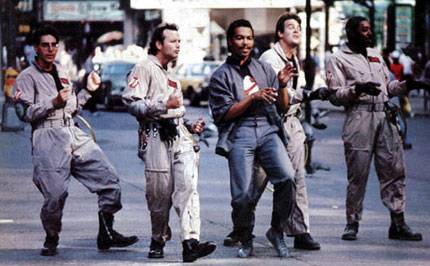
Who do you gonna call?
"If there's something strange in your neighborhood, who d'ya gonna call? Ghostbusters!"
 So goes the song.
In short, call the right guy for the right job.
So if your car is busted, call the mechanic!
If you are not feeling well, call your physician!
And if you want to know the best spa in town........call your priest!
No. I am just joking. But apparently one priest is not.
I think it is part of his ministry to check out the spas in his native country, the Philippines, or in the USA and then gives his expert reviews of each.
Hey, not that I am against priests going to spas, but will I expect him to give his opinion on these?
Everybody is entitled to his own opinion, but I do not see why a priest would go around evaluating the services of spas.
Well, I am not surprised at all since HAPIPADI celebarated Mass on a sailboat and posted his wishlist online, mostly sneakers, books and CDs.
In short, call the right guy for the right job.
So if your car is busted, call the mechanic!
If you are not feeling well, call your physician!
And if you want to know the best spa in town........call your priest!
No. I am just joking. But apparently one priest is not.
I think it is part of his ministry to check out the spas in his native country, the Philippines, or in the USA and then gives his expert reviews of each.
Hey, not that I am against priests going to spas, but will I expect him to give his opinion on these?
Everybody is entitled to his own opinion, but I do not see why a priest would go around evaluating the services of spas.
Well, I am not surprised at all since HAPIPADI celebarated Mass on a sailboat and posted his wishlist online, mostly sneakers, books and CDs.
Monday, September 5, 2011
Blessed Teresa of Calcutta

Ora pro nobis!
especially for the Philippines that it may not legalize RH!
"We must not be surprised when we hear of murders, of killings, of wars, of hatred. If a mother can kill her own child, what is left but for us to kill each other."
"Once that living love is destroyed by contraception, abortion follows very easily."
~ Bl. Mother Teresa ~
GULP Alert: Last Supper Confusion?

Read the caption AND the reactions.
Is this a case of being "uninformed" or was the nun really trying to say something "new" for the sake of 'something new' as inspired by the supposed 'Spirit of Vatican 2'? I think the nun is no nincompoop. She knows her theology and she knows she treading on dangerous grounds and I know she would not dare fight if confronted by the bishops about this....IF THEY EVER CONFRONT HER.
This is a GULP EXAM also folks!
So, open up your CCC and find the heresy!
I see a lot in this one. Like a preliminary reading of a blood exam, Ha!
I will let you first comment on this and I will post mine later in the week.
PS: The nun works at EUNTES
Saturday, September 3, 2011
Papal Encyclicals are infallible.

Pius XII said so!
It is not to be thought that what is set down in Encyclical letters does not demand assent in itself, because in this the popes do not exercise the supreme power of their magisterium. For these matters are taught by the ordinary magisterium, regarding which the following is pertinent: “He who heareth you, heareth Me.” (Luke 10:16); and usually what is set forth and inculcated in Encyclical Letters, already pertains to Catholic doctrine. But if the Supreme Pontiffs in their acts, after due consideration, express an opinion on a hitherto controversial matter, it is clear to all that this matter, according to the mind and will of the same Pontiffs, cannot any longer be considered a question of free discussion among theologians.
— Humani Generis
Unless, of course, you are an LST, MST, SVST and Euntes theologian!
They'll tell you that an encyclical is not an ex cathedra statement so you need not follow it, like Humanae Vitae.
BUT!......
Even if the pope makes an ex cathedra statement like what Pius IX did in proclaiming the dogma of Papal Infallibility, they'll tell you that the Dogma is wrong.
Why?
Because these theologians in those DANG schools, well not all of them, only the nutty ones stuck in the hippie "Imagine all the People" '60s, think and believe only one thing.
THEY ARE THE ONLY ONES WHO ARE INFALLIBLE!
Ha!
Makes sense right? It's just simple logic.
They don't want you to follow the Pope and the Church's Teaching Authority on faith and morals.
If you listened to them, who did you obey?
Right.
Meet Dr. Jose de Mesa
Taken from our favorite dissident school in the South, Euntes Mission Center
***

Jose M. de Mesa, Ph.D. a married Filipino Theologian, is a professor of Applied Systematic Theology at De La Salle University, Manila. He obtained his Ph.D. in Religious Studies from the Catholic University, Louvain, Belgium. He is a member of the Louvain Theological and Pastoral Monographs and is on the advisory board of Concilium. [the great dissident journal founded by some of the greatest dissidents of our time among them Yves Congar, Hans Küng, Karl Rahner, and Edward Schillebeeckx] His publications included: In Solidarity with the Culture; Studies in Theological Re-rooting; Basic Realities and Processes and Doing Christology, the Re-appropriations of a Tradition. [even earthworms won't recycle these rubbish.]
The speaker started by introducing himself as a married person which established certain veracity in speaking about family life in the perspective of a non-celibate. [same as saying "I am married. You are a celibate priest and bishop. Don't teach me anything about morality in a married state."] He also presented the preferred approach in seeing marriage, which has undergone lots of humiliation throughout the history of the Church, that is, “blessing-centered” rather than “problem-centered”. [problem centered? since when did the Church teach that to us?] He traced back the vision of marriage from the time of the Church Fathers and the succeeding epoch as highly influenced by Hellenistic dualists’ philosophy. [Not what the Bible says? Right.] Such philosophy influenced a lot in the way of thinking of the church and the implementation of her practices, which has become a tradition that is carried from one century to another.
The Church has been living in the medieval way of thinking for which Dr. de Mesa proposed a re-visioning of the church’s view of marriage as well as our negative (subconscious) accusations of marital commitment. [This is the language of Modernists. Anything from the past is bad. Anything they think of and as long as it does not resemble anything from the past is not only good, but the best.] Dualism has become problematic and has been marginalizing a good number of the faithful. It has an enormous influence in Catholicism and the consequences of its paradigm have reflected so much in many of her doctrines, beliefs, and traditions. Missionaries and the clergy in this regard have become problem solvers and experts of marriage which they never experienced themselves. [Bingo! There it is folks! This theologian does not even try to draw the great teaching of St. Paul about the mystical marriage of Christ with the Church and how this relates to the Christian view of marriage. But no, he says its all influenced by Hellenistic philosophy.]
For centuries, the vision of marriage and everything that is related to sexuality have been looked down and considered second class or low class as it were. [Geez! It was that bad? Poor parents fo St. Therese of Liseux who are both Blessed. But I guess he does not even believe in canonizations anymore, too.] This made the Church hierarchical and put married couples below as inferior with emphasis on the fallenness of women and weakness of children. [Modernists will always paint a gloomy picture of pre-Vatican II. Because of this premise, you now accept that the Church has been in a quandary for centuries that we need to fix it. And the jolly old 60s fixed it with Vatican II. Church is always hierarchical, well it still is. Women are fallen, according to them but not to us. Guess he does not even know Catherine of Siena and Teresa of Avila. And children are weak, well physically they are, that is why they need adults. So if you talk to these Modernist, who abhor the Church hierarchy but would not dare you question their authority, do not accept their premise about the sorry state of the Church before Vatican II.]
The proposed approach, that is, the “blessing-centered” or “creation-centered” approach makes missionaries and the church hierarchy as human witness who are able to listen to the threshold of marital life. This was made possible in the implementation of the double thrust of Second Vatican Council which is aggiornamento in her doctrine and ad fontes as regards our traditions. [ Ah yes! Vatican II! The super council! The mother of all councils! The only council canonized by dissidents!] This basically is not innovative but rather a process reclaiming the lost piece of the original Christianity as Jesus envisioned. [remember folks! These dissident theologians would always paint a picture that the Church has been corrupted for hundreds of years and that Vatican II and their own brand of Christianity brought it back to its "pristine beauty". "Just as Jesus envisioned it", like homosexual marriage, women priests, divorced clergy, contraception and abortion, which these dissidents support.]
Marriage, which majority of the world population is engaged with, sparks a certain interest that demands a particular response from the church that neglects its importance for a long time. By the lecture on the mission of the family in the church, new paradigm has been opened for further reflection. As an epilogue for the lecture on this day, Dr. de Mesa showed us a movie about a married couple which serves as a prologue for tomorrow’s session. [Guess it is a copy of their home video, eh? Ha!]
***
You see, when it stinks, you know their is a rotting fish somewhere.
Dr. Jose de Mesa is one of them.
One of these days, you'll see, this guy would lose his license to teach theology. And that University in Belgium would lose its title as a Catholic university.
Well, I might be too late for this but the university is already contemplating dropping the adjective Catholic from its official name.
If you find that your theology professor studied there at Louvain, Belgium, dump your Catechism of the Catholic Church. Your professor would not use it.
You see, they are the authority in Church teaching, not the Pope nor the bishops in communion with him.
That my friends, was how Jesus envisioned the Church to be, like what Dr. de Mesa wanted it to be.
Or is it the other way around or is this the Church of De Mesa?
***

Jose M. de Mesa, Ph.D. a married Filipino Theologian, is a professor of Applied Systematic Theology at De La Salle University, Manila. He obtained his Ph.D. in Religious Studies from the Catholic University, Louvain, Belgium. He is a member of the Louvain Theological and Pastoral Monographs and is on the advisory board of Concilium. [the great dissident journal founded by some of the greatest dissidents of our time among them Yves Congar, Hans Küng, Karl Rahner, and Edward Schillebeeckx] His publications included: In Solidarity with the Culture; Studies in Theological Re-rooting; Basic Realities and Processes and Doing Christology, the Re-appropriations of a Tradition. [even earthworms won't recycle these rubbish.]
The speaker started by introducing himself as a married person which established certain veracity in speaking about family life in the perspective of a non-celibate. [same as saying "I am married. You are a celibate priest and bishop. Don't teach me anything about morality in a married state."] He also presented the preferred approach in seeing marriage, which has undergone lots of humiliation throughout the history of the Church, that is, “blessing-centered” rather than “problem-centered”. [problem centered? since when did the Church teach that to us?] He traced back the vision of marriage from the time of the Church Fathers and the succeeding epoch as highly influenced by Hellenistic dualists’ philosophy. [Not what the Bible says? Right.] Such philosophy influenced a lot in the way of thinking of the church and the implementation of her practices, which has become a tradition that is carried from one century to another.
The Church has been living in the medieval way of thinking for which Dr. de Mesa proposed a re-visioning of the church’s view of marriage as well as our negative (subconscious) accusations of marital commitment. [This is the language of Modernists. Anything from the past is bad. Anything they think of and as long as it does not resemble anything from the past is not only good, but the best.] Dualism has become problematic and has been marginalizing a good number of the faithful. It has an enormous influence in Catholicism and the consequences of its paradigm have reflected so much in many of her doctrines, beliefs, and traditions. Missionaries and the clergy in this regard have become problem solvers and experts of marriage which they never experienced themselves. [Bingo! There it is folks! This theologian does not even try to draw the great teaching of St. Paul about the mystical marriage of Christ with the Church and how this relates to the Christian view of marriage. But no, he says its all influenced by Hellenistic philosophy.]
For centuries, the vision of marriage and everything that is related to sexuality have been looked down and considered second class or low class as it were. [Geez! It was that bad? Poor parents fo St. Therese of Liseux who are both Blessed. But I guess he does not even believe in canonizations anymore, too.] This made the Church hierarchical and put married couples below as inferior with emphasis on the fallenness of women and weakness of children. [Modernists will always paint a gloomy picture of pre-Vatican II. Because of this premise, you now accept that the Church has been in a quandary for centuries that we need to fix it. And the jolly old 60s fixed it with Vatican II. Church is always hierarchical, well it still is. Women are fallen, according to them but not to us. Guess he does not even know Catherine of Siena and Teresa of Avila. And children are weak, well physically they are, that is why they need adults. So if you talk to these Modernist, who abhor the Church hierarchy but would not dare you question their authority, do not accept their premise about the sorry state of the Church before Vatican II.]
The proposed approach, that is, the “blessing-centered” or “creation-centered” approach makes missionaries and the church hierarchy as human witness who are able to listen to the threshold of marital life. This was made possible in the implementation of the double thrust of Second Vatican Council which is aggiornamento in her doctrine and ad fontes as regards our traditions. [ Ah yes! Vatican II! The super council! The mother of all councils! The only council canonized by dissidents!] This basically is not innovative but rather a process reclaiming the lost piece of the original Christianity as Jesus envisioned. [remember folks! These dissident theologians would always paint a picture that the Church has been corrupted for hundreds of years and that Vatican II and their own brand of Christianity brought it back to its "pristine beauty". "Just as Jesus envisioned it", like homosexual marriage, women priests, divorced clergy, contraception and abortion, which these dissidents support.]
Marriage, which majority of the world population is engaged with, sparks a certain interest that demands a particular response from the church that neglects its importance for a long time. By the lecture on the mission of the family in the church, new paradigm has been opened for further reflection. As an epilogue for the lecture on this day, Dr. de Mesa showed us a movie about a married couple which serves as a prologue for tomorrow’s session. [Guess it is a copy of their home video, eh? Ha!]
***
You see, when it stinks, you know their is a rotting fish somewhere.
Dr. Jose de Mesa is one of them.
One of these days, you'll see, this guy would lose his license to teach theology. And that University in Belgium would lose its title as a Catholic university.
Well, I might be too late for this but the university is already contemplating dropping the adjective Catholic from its official name.
If you find that your theology professor studied there at Louvain, Belgium, dump your Catechism of the Catholic Church. Your professor would not use it.
You see, they are the authority in Church teaching, not the Pope nor the bishops in communion with him.
That my friends, was how Jesus envisioned the Church to be, like what Dr. de Mesa wanted it to be.
Or is it the other way around or is this the Church of De Mesa?
"The Latin Mass brings forth greater spiritual fruit"

Cardinal Domenico Bartolucci said this and thanked the Holy Father, Benedict XVI for Summorum Pontificum.
Here is a quote:
Then, the times unfortunately changed. But today, a true a proper reawakening by so many young people, who wish to relive the beauty of the Latin Mass and the greater spiritual fruit derived from it, can be noticed with great satisfaction; this is great, a very great comfort. And it makes us hope for a liturgical future certainly desired by Your Holiness. We thank the Lord, that he may help all those who are working for seriousness in sacred music. I firmly trust that, we the help of God, a true return to the bimillenary tradition of sacred music will take place.
Thank you, Your Holiness!
Read more about this over at Rorate Caeli.
Well, I guess a world-renowned Filipino liturgist would disagree with the good cardinal.
Ha!
Another Pinoy Jesuit and his spirituality

This I got from here...
***
On the wider appreciation of the environment, I think we should have a campaign for spirituality. And I think the best spirituality there is, is the ecofeminist spirituality. Seeing earth as a "mother," the way many tribal groups also consider the earth as "mother." So this ecofeminist spirituality should be developed. [This is a friendlier, nay "safe" way of saying "Hey! Let us do what the PAGANS are doing! Worship Nature!]
Right now, I encounter women and environment in all my advocacies. I think we need to develop that eco-spirituality, and the women could be very helpful in this area. It does not have to be very esoteric. I think we need to go back to the rituals. [What now?] And we need to soil ourselves with the earth--get in touch with the earth, walk barefoot on the ground. [Uhm...unless you are farming which I do.] We need more poetry to get in touch. We need words and metaphors to bridge us, to bridge the gap between our isolated selves. [*sniff*] We need to connect in a different way. We need to see the world in a grain of sand and see heaven in a wild flower. In other words, in all advocacies we are engaged in, I think we need to go into a contemplative mood. [No argument there.] Part of the environmental movement should really be contemplative action. Without that, the mountain is just a resource. Without that, a tree is just measured according to cubic feet or cubic metres. Without that, it's easy to dig the bowels of the earth. Without that, you see people as not part of a landscape. Without the contemplative spirit, you don't see the blood that has been spilled over the land in the previous struggles. And without that, you cannot appreciate that the earth is worshipping God. [Uhm.]
***
This may look all too safe but it borders on the Wiccan spirituality which a lot of priests and nuns in Mindanao love to teach their students and retreatants. And this Jesuit is no exception being a priest assigned in Davao.
Earthen jars used to burn incense, native woven, Wiccan "liturgical dance" you'll have it in your Mass later on.
Euntes and St. Vincent School of Theology is notorious for this.


So far so good...
Catholic News Service is reporting that the transition of English speaking countries for the new Missal is going on smoothly.
Will things happen the same here in the country?
Well, you know that both the "not well informed priests" and those who "knew things very well but opt to push for their liberal liturgical agenda" will get a lot of miseducation from that GHASTLY primer.
ADVICE TO PRIESTS:
Will things happen the same here in the country?
Well, you know that both the "not well informed priests" and those who "knew things very well but opt to push for their liberal liturgical agenda" will get a lot of miseducation from that GHASTLY primer.
ADVICE TO PRIESTS:
Look elsewhere in the Internet.
Search Google.
Visit WDTPRS.com
Visit WDTPRS.com
Don't buy that GHASTLY PRIMER.
SAVE YOUR P100.00!
SAVE YOUR P100.00!
Friday, September 2, 2011
Who will be the next Doctor of the Church?
September 2, 2011. (Romereports.com)
When Benedict XVI named St. John of Avila a Doctor of the Church during
World Youth Day Madrid 2011, the number of Doctors reached 34. The
honor is given to those who made contributions to theology, which
remain relevant, regardless of time.
But the question is who will be next? Well, according to Italian Vaticanist Sandro Magister, for now there are at least 17 candidates on hold. Eleven of them are male and six are female.
The one with the most progress is the case of French priest St. Louis Mary Grignion de Montfort. [Huzzah!!! One of my fave saints!] He founded the Society of Mary [Uhm, no. Its the Company of Mary not SOCIETY, also known as the Monfort Fathers.] and came up with the phrase “Totus Tuus,” meaning “Totally Yours” used by John Paul II. [Geez! Is that the best the writer can write about the saint? He wrote three great masterpieces only a Doctor of the Church can do, True Devotion to Mary, the Secret of Mary and the Secret of the Rosary.]
French priest, St. Vincent de Paul, who dedicated his life to helping the poor is also on the list. [Uhm not really if you ask me.]
Among the candidates are Spaniards, like St. Thomas of Villanova as well as St. Ignatius of Loyola, a knight who founded the Jesuits. [Uhm...The "uhm" is for his sons today and not for the saint. He is one of my patron saints, ok? And I like his Spiritual Exercises.]
Several Italians are also being considered, including St. John Bosco, [I like too!] founder of the Salesian Order. Also Antonino of Florence, [yes!] who was born in that same city and later became its Archbishop. St. Bernardino of Siena [yes!] who preached all over Italy in the 15th century and St. Lorenzo Giustiniani. [Not read much about him.] He was a bishop and the first Patriarch of Venice.
It also includes St. Cyril and St. Methodius, the two brothers who became missionaries of Christianity in the Slavic countries. Then, there's St. Gregory of Narek, who was an Armenian monk, poet, philosopher and theologian. [Hey I know a guy who will love to hear this news!]
Among the six women are St. Brigit of Sweden, who founded the Bridgettine Order and St. Margaret Mary Alacoque, a French nun who was beatified in 1920.
There's also St. Veronica Giuliani, an Italian nun who was canonized in 1839 and St. Hildegard of Bingen, who is mostly known for her religious visions.
The Patroness of the West Indies, St. Gertrude 'The Great', is also on the list as well as blessed Julian of Norwich who was originally from England.
Pope Paul VI named one Doctor during his pontificate as did John Paul II.
Benedict XVI has named one so far, but it's still unknown if he'll name more in the future.
***
I am not sure others in the list should be named doctors. But its just me.
What do you think?
Any missed names?
Thursday, September 1, 2011
On a related post...
I am still waiting for Paul Dion, STL, to answer my questions about his rants about my post on why I Love the Traditional Latin Mass otherwise knows as the Extraordinary Form of the Mass especially for someone like me who was born knowing and attending the Pauline Mass otherwise known as the Ordinary Form of the Mass.
So an old man says no one is asking for the Old Mass, when in fact the opposite is happening.
Got this from the Wisconsin State Journal
***
Ellie Arkin doesn't speak Latin, so upon entering Holy Redeemer Catholic Church in Madison on a recent Sunday, the 21-year-old UW-Madison student opened a Latin-to-English translation book provided by the church. [provided by the Latin Mass Societies. It is also being done here in the Philippines.]
For the next hour, she and many of the other parishioners followed along in the book as the Mass unfolded mostly in Latin.
 For centuries, this was the only way Catholics around the world experienced Mass. [ONLY WAY!] Reforms ushered in by Vatican II in the 1960s largely eliminated Latin Mass, but now, across the country and in the Madison Catholic Diocese, traditionalists are seeking its comeback. [The wave is sweeping the globe but...]
Supporters say it offers a reverence and gravity lacking in today's more casual worship approach. [ditto.]
"There's this incredible sacredness you can feel and taste and see — it is not just a social gathering," said Jacek Cianciara, 67, of Madison, one of the parishioners helping to bring back Latin Mass locally. [Oh, really? I think you are just nostalgic.]
Other Catholics find the older style needlessly difficult to follow and too passive.
"When it's in Latin, it's just rote — you're not reading the words for the real meaning," said Alice Jenson, 66, of Fitchburg. "I'm opposed to having this artificial barrier being put up." [Uh, what?!]
[Hmmm... these are both older groups of people, eh? One is nostalgic and one is grumpy?]
Catholics now can attend a Mass in Latin somewhere in the 11-county diocese every day, although the vast majority of worship services remain in English. About 200 Catholics consistently attend a Latin Mass at least weekly, with others dropping in periodically, the diocese estimates.
That's a tiny slice of total church attendance — about 57,000 people attend Mass in the diocese each week — but it's a vocal and growing slice.
Latin Mass, also known as the Tridentine Mass, is distinguished by more than language. The priest faces the altar, which traditionally faced East, the direction from which Catholics believe Christ will return. [Not looking at each other while the priest flashes his pearly white Close-Up smile?]
This means the priest has his back to the people, which traditionalists view as appropriate, like a general leading his troops. [Huzzah!]
The priest speaks in a low, quiet voice, rendering the Latin largely and intentionally inaudible to parishioners. That's because the priest should be praying to the Lord in their name, not proclaiming something to the people, said Monsignor Delbert Schmelzer, 81, one of the diocesan priests who leads Latin Masses.
"That emphasis is a world of difference," he said. [It really does! It places more emphasis on the role of the priest as offerers of sacrifice for and in behalf of the people, not an entertainment host!]
Gregorian chant is the required music, sometimes accompanied by an organ or singing. Female altar servers are not used because traditionalists believe the role should be reserved for boys, the only ones who can become priests. [which is why!]
Only the priest reads the Scriptures or distributes Communion. [And you know why?]
The 1962-65 Second Vatican Council introduced Masses in local languages, and reform-minded theologians followed with a host of other changes that loosened the structure of the worship service and increased roles for laypeople. [why increase the role of laypeople in the sanctuary at all? The role of the laity is in the outside world, not in the liturgy!]
Girls were added as altar servers, and church members started assisting priests as Scripture readers and Communion distributors. The music expanded to include guitars, folk choirs and hymns such as "Amazing Grace." [became less Catholic. We suddenly lost our identity.]
Priests began facing the people instead of the altar. [instead of the Lord.]
"Vatican II shifted the emphasis to draw more on the talents and abilities of people who are not ordained — the idea that, ‘It's my church too,'" said the Rev. Steven Avella, a history professor at Marquette University in Milwaukee and a Catholic priest. [Oh that was right on the kisser, Fr. Avella! "It's my church too" as if the laity does not have anything to do in the Church!]
The same principle was behind the translation of the Mass into the native tongue, Avella said. "People could understand what was being said and respond in their own language," he said. [Because people who attended the Traditional Latin Mass and who used missals with translations STILL COULD NOT understand what they are reading?]
For traditionalists, the changes were unfortunate.
"Churches were full in the 1930s and 40s, but they're not full now because people don't even understand why they're there," Schmelzer said. [Because "We are Church" worked wonders!]
Eighty-two people attended the Aug. 7 Latin Mass at Holy Redeemer, held every Sunday at 7 a.m. Attendance averages 60 to 100 people, Cianciara said.
About 90 percent of the Mass was in Latin, save for a short sermon (in English) and the Scripture reading (first in Latin, then English.)
Many women wore veils, traditionally a way females showed outward humility in the Lord's presence. The crowd seemed about evenly split between young and old.
Jeff Skalsky, 47, of Fitchburg, was there with his wife and six children. He likes that parishioners at a Latin Mass treat the sanctuary with reverence.
"You don't see people after Mass standing up and talking and being loud," he said. "It's reserved as a holy place, not a place to socialize." [We don't see it here in our churches anymore, eh?]
Avella said Latin Mass seems to have a particular appeal among people who are politically and socially conservative. [!] Cianciara did not take issue with the characterization.
"These are people who base their lives on very strong moral principles," [Hmm...] he said. "If you extend that to politics, they are more conservative. You will find they are against abortion, against euthanasia, against homosexual marriage." [Now that I can honestly say. But there are some loonies as well. I'll keep my mouth shut on this one.]
Over the years, the Vatican has sought to clarify issues surrounding Latin Mass, with the result being a gradual lifting of restrictions on how and when it can be celebrated. For instance, a bishop once had to give permission for Latin Mass to be celebrated in his diocese. [Which was so rare a National Geographic Special was planned! Truly one for the musuem! A gargantuan archeologic find if you see a bishop granting permission for a priest to celebrate TLM in public before Summorum Pontifium!] Now, individual priests no longer need that approval.
The most recent Vatican announcement, in May, said priests should approve Latin Masses for even small groups of people who request it, even if the group is formed of people from different parishes or dioceses. [Even if! Still most parish priests PREVENT TLM to be celebrated in their churches!]
In the Madison diocese, parishioners petitioned Bishop Robert Morlino to restore Latin Mass in 2006. Morlino, a strong supporter, led a Latin Mass in December 2007. It was the first official Latin Mass in the diocese since 1969. [Not here in the Archdiocese of Manila!]
Regular weekly Latin Masses began at Holy Redeemer in early 2008, initially attracting 20 or so people. Now seven of the diocese's 134 churches — one each in Madison, Roxbury, Fennimore, Merrimac and Mazomanie and two in Platteville — offer a Latin Mass at least once a week.
Avella predicts Latin Mass will continue to appeal to a minority of Catholics.
"Most U.S. Catholics still gravitate to their home parishes where the Mass is in English, the music is more diverse, and they can be active in various liturgical ministries," he said. [If school plays were not enough in your childhood days!]
Schmelzer sees a gradual blending of the more-formal Latin Mass with the more-casual new Mass.
"They are the same Mass, just different styles," he said. "The Pope would like it to be a melding of the best parts of both for the future, and that may take a generation or two."
***
Comments Paul Dion?
Subscribe to:
Posts (Atom)