Pages

Showing posts with label causes of saints. Show all posts

Wednesday, May 20, 2015

BREAKING NEWS! Mother Teresa to be canonized on September 2016! Not really.

Mother Teresa

Blessed Teresa of Calcutta is reportedly going to be canonized on September of this year according to reports published online by the Times of India.

But this is apparently a rumor as reported by Inés San Martín of CruxNow.

Vatican spokesperson, the Jesuit  Rev. Fr. Federico Lombardi called it a "working hypothesis" since the canonization will be considered "apt" for the observance of the Extraordinary Jubilee of Mercy proclaimed by the Bishop of Rome, Pope Francis.


Monday, April 13, 2015

BREAKING!!! Cardinal Kasper working to have architect of Liturgical Revolution Annibale Bugnini BEATIFIED!


Yes, you read that right.

Cardinal Walter Kasper, the same theologian who resurrected the zombie called "Communion for the Divorce and Remarried" has once again struck!

In a report posted at The Remnant, Cardinal Kasper, allegedly submitted in his position/petition letter to the Cardinal Prefect of the Sacred Congregation for the Causes of Saints, Cardinal Angelo Amato,  to have the liturgical architect of Vatican II, and long suspected to be a Freemason, raised as a Servant of God.


"In his long letter to Cardinal Amato, Kasper, according to unconfirmed reports, cites the heroic virtues of Bugnini at length, particularly:

  • His devotion and enthusiasm for the cause of aggiornamento, as displayed by his heroic perseverance in reforming the liturgy in the face of fierce resistance from Curial reactionaries such as Cardinals Ottaviani and Bacci, the two-thirds of the bishops who voted against his “Missa Normativa,” right-wing prelates such as Abp. Lefebvre, rebellious priests such as Fr. Gommar DePauw of the American traditionalist movement and the Abbe de Nantes, and even secular figures such as Tito Casini.

  • His prophetic ecumenical vision, which led him to invite six Protestants, four Aztec dancers, and an aborigine with a straw hat, to serve as informal advisers during the development of the new Mass, and to consult Protestant liturgical books and the Talmud

  • His clarity of thought, which formed the foundation of the new countersyllabus of universalism, religious freedom, collegiality, community, futile dialogue and free love.  

  • His kindly refusal to investigate repeated allegations of sexual misconduct among certain members of his Consilium, while invoking St. John the Baptist and the power of ancestral waters to protect them.

  • The steadfast courage of his radical Christian discipleship, as he stripped the old Mass of Catholic theology and anything else which might offend Protestants, describing the result as “a major conquest of the Catholic Church.”

  • His pivotal role in the collapse of the ghetto of Catholic tradition and the “razing of the bastions” called for by Hans Urs von Balthasar, by his embrace of all world religions, from Animism to Zoroastrianism to “I’m OK, You’re OK.”

  • His profound humility and personal holiness, exemplified by his silent acceptance of being twice dismissed under suspicion of Freemasonry, by Popes John XXIII and Paul VI, as well as his prudential refusal to explain his apparent kissing of the Masonic “Book of the Royal Arch.

  • The widespread impact he had during his travels, especially during his final journey to Iran, where, exiled by Paul VI, he celebrated many inculturated Masses and sprinkled many a receptacle of water, flour and hummus on the sacred sands of the former Persian Empire."

Stay tuned as this develops. We seriously hope this is a bad joke.

But it's Kasper. 

Kasper in German means clown.  FYI.

Thursday, February 5, 2015

Romero Beatification: It was Benedict XVI, not Francis

http://wp.production.patheos.com/blogs/simchafisher/files/2015/02/oscar-romero.jpg

The cause of Archbishop Oscar Romero took a rather interesting twist.  Not the cause itself, but who really worked to fast-track the cause of the murdered Salvadoran archbishop.

Here is what he said in 2013.

"Archbishop Vincenzo Paglia, president of the Pontifical Council for the Family and the official promoter of the Cause of the Archbishop Romero of San Salvador, made the announcement in a homily on 20 April, just a few hours after a meeting with Pope Francis.

The archbishop, who was preaching at a Mass in the town of Molfetta, to mark the 20th anniversary of the death of the diocese’s Bishop Antonio Bello, said: “Today, the anniversary of the death of Don Tonino, the cause for the beatification of Archbishop Romero was unblocked.”

Fast-track to 2015, the same archbishop said:

The monsignor who spearheaded the saint-making process for El Salvador's slain Archbishop Oscar Romero said Wednesday it was Pope Benedict XVI — and not Pope Francis — who removed the final hurdle in the tortured, 35-year process.

Archbishop Vincenzo Paglia told reporters Benedict "gave the green light." Speaking a day after Francis declared that Romero died as a martyr for the faith, Paglia said Romero's beatification would likely be within a few months in San Salvador.

Better we clear this up or we'll have the rabid media ganging up on the pope emeritus again.

Wasn't he described as God's rottweiler?

Yeah. Right.


http://www.acnuk.org/data/images/pope_benedict_holy_land_families_250px.jpg 

http://www.christophersmith-op.com/wp-content/uploads/2013/10/PTC-1813__86928_zoom.jpg


Tuesday, February 3, 2015

BREAKING NEWS: Archbishop Oscar Romero to be beatified soon!


BREAKING NEWS: The Congregation for the Causes of Saints has announced that Pope Francis has recognized the martyrdom of the Servant of God, Archbishop Oscar Romero.

Thursday, September 18, 2014

BREAKING NEWS: First Saint of Sri Lanka!

Pope Francis today signed decrees clearing the way for the canonization of an Indian priest and an Italian religious sister. He also confirmed miracles attributed to the intercessions of an Italian bishop and a Canadian religious sister, pointing to their beatification in the near future.

Blessed Joseph Vaz, an Indian priest of the Oratory of St. Philip Neri, was founder of the Oratory of the Holy Cross of Miracles in Goa (1651-1711). Known as the “Apostle of Ceylon” on account of his evangelization of the Asian island, he was beatified by St. John Paul II in 1995.

Blessed Maria Cristina of the Immaculate Conception (nee Adelaide Brando), was the Italian foundress of the Oblation Sisters of the Holy Sacrament (1856-1906). Remembered for her zeal for God and neighbor, often she would tell her spiritual daughters: "Love of God and of neighbour are two branches that are connected to the same trunk. The love of God gives life to the love of neighbour; and this, in turn, nourishes love towards God".

Meanwhile, the Pope promulgated decrees confirming miracles attributed to the intercessions of Venerable Servant of God Pio Alberto del Corona, Italian professed priest of the Order of Preachers, bishop of San Miniato and founder of the Dominican Sisters of the Holy Spirit (1837-1912); and Venerable Servant of God Marie-Elisabeth Turgeon, Canadian foundress of the Sisters of Our Lady of the Holy Rosary (1840-1881).

The Pope approved the votes of the Ordinary Session of the Cardinal and Bishop Fathers in favour of the canonisation of Blessed Joseph Vaz, the Vatican said. He also decided that a consistory will be convoked shortly for his canonisation and that of Blessed Maria Cristina.


Tuesday, August 19, 2014

Pope confirms movement in cause of Abp. Oscar Romero

http://cacina.files.wordpress.com/2014/03/corbis-u1999683.jpg
Archbishop Romero after he was shot.


ABOARD THE PAPAL PLANE (AP) - Pope Francis opened the way Monday to a quick beatification for Oscar Romero, saying there are no more doctrinal problems blocking the process for the slain Salvadoran archbishop who is one of the heroes of the liberation theology movement in Latin America.

Romero, the archbishop of San Salvador, was gunned down in 1980 while celebrating Mass. He had spoken out against repression by the Salvadoran army at the beginning of the country's 1980-1992 civil war between the right-wing government and leftist rebels.

Francis told journalists traveling home from South Korea that Romero's case had previously been "blocked out of prudence" by the Vatican's Congregation for the Doctrine of the Faith but has now been "unblocked." He said the case had passed to the Vatican's saint-making office.  [the Holy Father cleared any speculation that this was all the work of the Rottweiler of God.  Remember, he too worked with Cardinal Ratzinger to stomp out liberation theology in Argentina.]

The congregation launched a crackdown on liberation theology under then-Cardinal Joseph Ratzinger, fearing what was deemed as Marxist s excesses. The movement holds the view that Jesus' teachings imbue followers with a duty to fight for social and economic justice.  [A little bit of trivia.  the originator of liberation theology is a Dominican friar, Gustavo Gutierrez.  So much for being too loyal to the teachings of the Church, no?]

Francis said of Romero's case that "it is important to do it quickly," but that the investigation must take its course.  [I believe the Holy Father is saying that he will opt to take the usual course of waiting for an approved miracle before he beatifies the slain archbishop.....or........Romero could be declared a martyr so the needed miracle for beatification will be waived.]

He declared that Romero "was a man of God" and suggested that he wanted to expand the church's concept of martyrdom to include a broader field of candidates.

Unlike regular candidates for beatification, martyrs can reach the first step to possible sainthood without a miracle attributed to their intercession. A miracle is needed for canonization, however.

Traditionally, the church has restricted the martyr designation to people who were killed out of hatred for the Catholic faith. Francis said he wanted theologians to study whether those who were killed because of their actions doing God's work could also be considered martyrs.

"What I would like is that they clarify when there's a martyrdom for hatred of the faith - for confessing the faith - as well as for doing the work for the other that Jesus commands," Francis said.  [If doing what Jesus commands would constitute confessing the faith, and a person is martyred for doing that, then..............how would that make Gandhi and Martin Luther King?  Just asking.  Yeah, I know they are not Catholics.]

Questions over that distinction have been at the root of the theological debate over whether Romero was killed by El Salvador's right-wing death squads for professing the faith or because of his political activism in support of the poor.

The chapel where the archbishop was murdered.  At the back it says "At this altar, Mons. Oscar Romero offered his life for God and his country."
 
***

Archbishop Romero was a controversial figure indeed but his defense of the poor who are also like us, children of God cannot be underestimated.  But the question whether he was martyred for his Faith, or for acting out the faith and doing his role as a shepherd has to be answered by the competent authorities.

Not by a "Facebook theologian" who can't construct a decent English sentence.

Need my meds now.

Bye.


Wednesday, June 18, 2014

BREAKING NEWS: Theologians approve miracle attributed to Venerable Fulton Sheen!


PEORIA, Ill. (CNS) — The possible miracle needed for the beatification of Archbishop Fulton J. Sheen took another step toward papal recognition June 17 when a panel of theologians met at the Vatican, the Archbishop Fulton Sheen Foundation announced.

As a normal part of the sainthood process, the theologians met to consider whether or not the promoters of Archbishop Sheen’s cause demonstrated that the proposed miracle — the survival of a child delivered stillborn — occurred after prayers for the intercession only of Archbishop Sheen.

In March, a seven-member board of physicians convoked by the Congregation for Saints’ Causes agreed there was no natural explanation for why the boy’s heart started beating 61 minutes after his birth.

The child, James Fulton Engstrom, is now 3 years old and developing normally. His mother, Bonnie Engstrom, had said she had no pre-composed prayer asking for help from Archbishop Sheen. “I just kept repeating his name over and over in my head: Fulton Sheen, Fulton Sheen, Fulton Sheen.”

Archbishop Sheen was a Peoria diocesan priest who gained fame for his 1950s television show “Life Is Worth Living” and for his 16 years at the helm of the Society for the Propagation of the Faith. The archbishop died Dec. 9, 1979, in New York.

In a statement June 17 from the Archbishop Fulton Sheen Foundation, Bishop Daniel R. Jenky of Peoria said, “With the recommendations of the medical experts and now the theologians, the case will next be reviewed by the cardinals and bishops” who are members of the Congregation for Saints’ Causes. [This is but ministerial. The crucial report is actually the certification of a miracle by the medical experts and the theologians.]

“Finally, the miracle would be presented to Pope Francis, who would then officially affirm that God performed a miracle through the intercession of Fulton Sheen. There is no timeline as to when these next steps might move forward,” Bishop Jenky said.

If Pope Francis formally issues the decree recognizing the miracle, the bishop said, “Sheen could then be declared ‘Blessed’ in a ceremony that could be celebrated in Peoria, Sheen’s hometown.”

Another miracle would be needed for Archbishop Sheen’s canonization.


Monday, May 12, 2014

Pope finally oks miracle attributed to Paul VI; sets beatification date

Another I told you so moment.

from the Associated Press


***


Pope Paul VI, who did much to modernize the Roman Catholic Church [yes he did.] but pronounced a ban on artificial contraception [and contraception is a mark of modernity?] which was widely defied by the faithful, has moved a step closer to sainthood with Pope Francis' official confirmation of a miracle.

The date for the beatification was set for Oct. 19, the Vatican said Saturday, a day after Francis formally certified the miracle said to involve a risky birth in California. Beatification is the last formal step before possible sainthood.
 
During his pontificate from 1963 to 1978, Paul made landmark progress in improving Catholics' relationship with other Christians.

But he disappointed many Catholics who were hoping for liberalization of church teaching on sexuality. After much consultation and, reportedly, personal anguish, Paul VI enshrined the church's teaching against artificial contraception in the 1968 encyclical "Humanae Vitae" ("of human life").  [No he didn't.  He just reaffirmed what was taught by the Church all along.  He did not enshrine it.  He just said it again!]


***

Paul VI disappointed both liberals and traditionalists.  Need I say more about that?

But remember that when the Pope beatifies a person, the pope publicly declares that that person enjoys the Beatific Vision and can thus be invoked for his intercession.

Just saying.


Friday, May 9, 2014

Miracle attributed to Paul VI approved!


Don't tell me I told you so?

Didn't I break the news?

It was in 2012 when I heard the news that the process for the pope's beatification was being fast-tracked, no!  Express Lane tracked!  And a few weeks ago, I broke the news that Paul VI is set to be beatified with word coming out of Rome that a miracle has been approved with no scientific explanation for the inexplicable healing of a fetus!   Yes, an unborn boy!


***
From this source.

Giovanni Battista Montini's beatification is near: this morning cardinals and bishops of the Congregation for the Causes of Saints unanimously approved the miracle attributed to the intercession of the Italian Pope from Brescia, who died in August 1978. The year which marked the canonization of two Popes – John XXIII and John Paul II – will also be the year of Paul VI’s beatification. In the next few days Pope Francis will be promulgating the decree on the miracle attributed to the late Pope and the date suggested for the actual beatification is 19 October. The beatification is expected to take place in Rome on the occasion of the concluding ceremony of the Extraordinary Synod of Bishops on the Family: [I told you so!]  it was Paul VI himself who established the Synod in September 1965 in response to a request made by the Council fathers. It should be noted that next August will mark the 50th anniversary of the publication of Paul VI’s first big encyclical, the “Ecclesiam Suam”, which he wrote and edited entirely by himself.

The miracle attributed to the intercession of Paul VI was witnessed in the United States in 2001. It involved the healing of an unborn child, which was found to have serious problems and a high risk of brain damage: the foetus’ bladder was damaged and doctors reported ascites (presence of liquid in the abdomen) and anhydramnios (absence of fluid in the amniotic sac). All attempts to correct the problem proved futile and in the end the doctors said the child would either die in the womb or it would be born with severe renal impairment. Abortion was offered as an option but the mother refused. Instead, she took the advice given to her by a nun who was a friend of the family and had met Montini: she decided to pray for Paul VI’s intercession using a fragment of the Pope’s vestments which the nun had given her.  [And some people just keep relics for themselves, even using it for scrupulous reasons, or for bragging rights!]

Ten weeks later the results of the medical tests showed a substantial improvement in the child’s health and it was born by Caesarean section in the 39th week of pregnancy. The case was presented to the former Postulator of the Cause, the Jesuit Paolo Molinari – who passed away last week - in Rome. Faith weekly Credere revealed that the diocesan inquiry was launched in 2003 and all witnesses agree that the case in question cannot be explained scientifically.

The child has made it to thirteen and his health is constantly monitored to ensure that his psychophysical state is normal. Doctors are especially keeping an eye on the child’s renal function. On 12 December last year the medical consultation of the Congregation for the Causes of Saints headed by Professor Patrizio Polisca, confirmed the impossibility of explaining the healing and the dicastery’s theologians gave their approval last 18 February. Benedict XVI promulgated Paul VI’s heroic virtues on 20 December 2012.


***

Someone said "There is a rush to canonize these Vatican II popes!  The pope is in fact canonizing Vatican II!"

Wha???

So what about Paul's "Humanae Vitae"?  Nada?

How about Pius XII?


A miracle is being investigated.  What is so amazing about this is it involved not just Pius XII, but also John Paul II!

Read it here.


Monday, February 24, 2014

An atheist helps the Church in declaring new saints!


Prof Jacalyn Duffin shaking hands with Pope John Paul II
Meet Dr. Jacalyn Duffin, MD, an atheist who wrote two books about medical miracles brought about by candidates to sainthood. Her investigations helped canonized them.

In a Wikipedia entry:

"Upon her return to Canada, Duffin settled in Ottawa where she took on a contract to review a set of slides, which she assumed were to be used in a malpractice suit. She was given no information about the patient, but identified the young woman as suffering from acute myeloblastic leukemia, “the most aggressive leukemia known.” As the slides were from some 5+ years earlier, she assumed the patient as deceased, as that form of leukemia kills usually within two years. Instead, she found that the patient had, after a relapse, gone into remission and was doing well some five years on. Duffin's testimony was to be used by the Vatican to determine whether Marie-Marguerite d'Youville (1701 – 1771) had performed a miracle and was worthy of canonization. According to Duffin, “They never asked me to say this was a miracle. They wanted to know if I had a scientific explanation for why this patient was still alive. I realized they weren’t asking me to endorse their beliefs. They didn’t care if I was a believer or not, they cared about the science"

You can read her own account of that miracle, how she judged the case only through the lens of a microscope.   She has also written two books about the medical miracles documented in the different canonizations.

She remains an atheist. Now that is one miracle let us hope for!

Friday, November 8, 2013

Relic scammer alert part II

Not only is he committing the Sin of Simony,  he is also committing a Sin with Simon!


What else can be found inside the closet?

Just look at the labels.

Tuesday, October 29, 2013

Relic scammer alert!

More warnings for a relic collector who is scamming people!

Be warned!

emm sir Pedro, something else you should know about MP....besides sa pagtatago ng relics. Em, he has been "promoting" the canonization of Blessed Ma. Teresa of St.Joseph, by "veneration" and distributing holy cards and information about her (take note the holy cards have relics in them and he recieved the materials from the Sisters in the Netherlands without cost at all), however...recently there have been complaints sent to the Sisters in the Netherlands saying M___ P___ has been charging people for veneration of relics, and for the holy cards of Blessed Mother Teresa, he charged 200 pesos for each card. 
He tried to sell a relic card of Blessed James Alberione to a patient in San Juan de Dios Hospital.   For 100-300

Do we have an idea why this guy caused so much a controversy in the Church?  Why he taught of making a a new religion while constipating in his toilet?


Postulators of these blesseds must be warned.

The name of this scammer must be sent immediately to the Archdiocese of Manila who has jurisdiction over MP.  And his parish priest must be warned.

Anyone who would like to volunteer to email the postulators of all those who he contacted?

This guy doesn't know that he is committing a terrible sin of SIMONY.

The cardinal prefect for the Causes of Saints already spoke up against it.

And I have blogged about it too.


Monday, October 14, 2013

Spanish Martyrs beatified! New Pinoy Blessed!


The Spanish persecution of Catholics happened during the time of the young Fr. Josemaria Escriva.

It was shown in the movie "There be dragons".

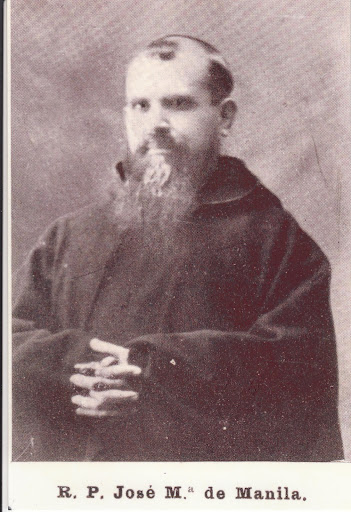
One of those beatified is a Spanish who was born in the Philippines, the Capuchin martyr Blessed Jose Maria de Manila, born to Spanish parents in Manila.  His father was the last Spanish mayor of the City of Manila and received his education at the Ateneo, Letran and UST, all of which then were located in Intramuros.


Monday, September 30, 2013

BREAKING NEWS! John Paul II and John XXIII to be canonized on Divine Mercy Sunday

On the Twitter page of Catholic News Service.

***

Catholic News Svc ‏@CatholicNewsSvc 51m
The date for canonization -- April 27, 2014 -- is Divine Mercy Sunday, an observance ordered by JPII & important theme for Pope Francis

Catholic News Svc ‏@CatholicNewsSvc 53m
Those who are not cardinals have been asked to leave the room where the consistory took place.

Catholic News Svc ‏@CatholicNewsSvc 54m
April 27 is canonization date for John Paul II, John XXIII

Catholic News Svc ‏@CatholicNewsSvc 59m
In Latin, Cardinal Amato asks Pope Francis to solemn proclaim the holiness of Popes John Paul II and John XXIII

Catholic News Svc ‏@CatholicNewsSvc 1h
Popes John XXIII, John Paul II were servants peace, Cardinal Amato says

Catholic News Svc ‏@CatholicNewsSvc 1h
Cardinal Amato asks pope to approve canonizations; says both John Paul II, John XXIII dedicated their lives completely to proclaiming Gospel
Expand
 Catholic News Svc ‏@CatholicNewsSvc 1h
We hope to have soon the official announcement of the date for the canonization of Blessed John XXIII, John Paul II

Catholic News Svc ‏@CatholicNewsSvc 1h
#PopeFrancis is about to begin consistory where cardinals support canonization of Blessed John Paul II, John XXIII

***

No word yet as to who will be the new cardinals or if there would be any to be created.

Thursday, August 22, 2013

JP2 and J23 Canonization date will be revealed on Sept. 30!

Vatican City, August 21, 2013 (Zenit.org) Junno Arocho Esteves | 593 hits

In a presentation on Saint Giovanni Battista Piamarta held in Rimini, Cardinal Angelo Amato, prefect for the Congregation for the Causes of Saints, confirmed that Consistory that will announce the date of Canonization for John XXIII and John Paul II will be held on September 30th.

In an interview with Vatican Radio, Cardinal Amato reiterated the Holy Father’s words during his press conference held on his return flight from World Youth Day in Rio.

“On the airplane, the Holy Father, who was returning from Brazil, already announced that their Canonizations will not be imminent - in these last months of 2013 - but in 2014,” the Cardinal said.

“A precise date will be announced by the Holy Father on September 30th, when the Consistory presided by him will be held. In that moment, the Holy Father will give the official date, that only he knows.”

The Prefect for the Congregation for the Causes of Saints went on to say that John XXII was “the great prophet and creator of the Council”, while John Paul II is regarded as “the one who put it into practice and developed it.”

Cardinal Amato regarded them as two pillars not only of Christian culture but of Christian holiness as well.

***

And Sept. 30 is the day of this other great guy!


And I think the date of the announcement has some significance with the feast of St. Jerome.

Not only was the saint known for his work on the Vulgate, but he is a Doctor of the Church.

So, I think the pope has something on his mind when he decided to hold the consistory announcing the canonizations on his memorial.

Mark you calendars folks!

Friday, August 2, 2013

Francis wants to canonize Pius XII


Vatican City, Jul 31, 2013 / 11:05 am (CNA/EWTN News).- Pope Francis is considering whether he will make Pope Pius XII a saint, in the same way that he approved the cause of John XXIII.

A source who works at the Vatican’s Congregation for Causes of Saints, who asked for anonymity, told CNA July 25 that “just as Pope Francis moved ahead with John XXIII’s canonization, he is considering the same thing for Pius XII.”

According to the normal procedures, Pius XII would be beatified once a miracle attributed to his intercession is officially certified by a team of doctors and recognized by a commission of cardinals.

But if Pope Francis decides to go ahead without a miracle, he could “even canonize him with the formula of scientia certa (certainty in knowledge), thereby jumping over the step of beatification,” the source said.

“Only the Pope is able to do it, and he will, if he wants to.” [His power is absolute.]

Pope Francis is very interested in Pius XII because “he considers him ‘a great,’ in the same way as John XXIII is, even if for different reasons,” the source explained.

But there is also a historical reason that Pope Francis is interested in Pius XII.

When Pope Paul VI started the beatification and canonization process in 1967, nine years after Pius XII’s death, he formed a committee of historians to conduct an in-depth study of his predecessor’s life and behavior, giving particular attention to the events of World War II.

The committee was made up of four Jesuits: Fathers Pierre Blet (France), Angelo Martini (Italy), Burkhart Schneider (Germany), and Robert A. Graham (United States).  [Back when they were really submissive to the Pope.]

Their work led to the publication of “Actes et Documents du Saint Siège relatifs à la Seconde Guerre Mondiale” (Acts and Documents of the Holy See related to the Second World War), an 11-volume collection of documents from the Vatican’s Secret Archive about Pius XII’s papacy during that tumultuous time.

Yet, the remainder of the documents from Pius XII’s papacy is not expected to be released until 2014 – the time it will take to organize the papers.

The completed catalog will include approximately 16 million documents from Pius XII's papacy (1939-1958).

Pope Benedict XVI initially decided to postpone Pius XII's cause for sainthood and advocated waiting until the archives would be open for researchers in 2014.

But Benedict changed his mind and declared Pius XII Venerable on Dec. 19, 2009, based on the recommendation of the committee investigating his cause.

The decision was met with criticism from some Jewish quarters, which charged that Pius XII was silent about the Holocaust and did not do enough to resist the Germans.

Despite the conclusions of the committee, the debate that followed the initial criticism brought Pius XII’s canonization process to a halt.

According to Matteo Luigi Napolitano, a member of the Pontifical Committee for Historical Science who wrote several books about Pius XII, “for what concerns the historical judgment, the dossier on Pius XII is almost complete.”

Napolitano added in his July 29 interview with CNA, “theological judgments on Pius XII’s life and behavior” are “not competence of the historians.”

His remarks referred to what is known as a “positio,” a document that is compiled for every person being considered for canonization, after they have been declared “venerable” – the second step in the process.

The study is comprised of two parts: the first deals with the history of the person and is sketched by a commission of historians, while the second contains a  “theological judgment” on the life and works of venerable, which is handed down by a theological committee.

At the moment, according to the source from the Congregation for the Causes of Saints, Pope Francis has said he wants Pius XII’s cause to move ahead.

Since there are several miracles attributed to Pius XII’s intercession, the source explained that Pope Francis might decide that he will sidestep the normal process and declare him a saint.

“It is not impossible that the Pope would act in the way he did for the canonization of John XXIII.”

When Pope Francis decided to approve the canonization of John XXIII, he submitted his case to a vote by the members of the congregation, despite the fact that “a miracle attributed to the intercession of John XXIII was discussed,” the source said.

But “the miracle would have needed further checks,” the saints expert explained, so Pope Francis “opted to canonize him without waiting for the certification of the miracle.”

The source maintained, “this seems to be possible for what concerns Pius XII.”

Matteo Luigi Napolitano acknowledged that the possibility of the Pope pushing the cause forward. There are “several (saints) causes that, for several reasons, are the object of pressures,” he remarked.

What remains to be seen is whether Pius XII being declared a saint will result in a new debate about the emerging historical record of the wartime Pope or a recycling of the claims that he was “Hitler’s Pope.”

Napolitano noted, “the debate about Pius XII is more widely a debate about the Shoah, i.e. the biggest tragedy of the Second World War.”

So, Napolitano said, “it is normal to investigate what the Vatican did during that period.”

This investigation involves several areas of interest: the choice of the Holy See to remain neutral, the way Christian values were lived during that period, the choices of Catholics who confronted the tactics of the Nazis, and what dioceses and clergy in countries involved in the war did.

Napolitano underlined that “the ‘positio’ on Pius XII is made up of all of these aspects, with a collection of sources that agreed the Congregation for the Causes of Saint should carry their job forward.”

For what concerns a historical judgment of Pius XII's behavior, “interpretations can vary, but I can say that the most authoritative Jewish, Catholic and lay historians agree on one key point: Eugenio Pacelli never was, and he never could be, ‘Hitler’s Pope.’”


***

Pope Pius XII was a better administrator, theologian and diplomat than Blessed John XXIII, I can tell you that.

But we cannot tell the Holy Spirit who should be blessed or saint first.

And the pope can do whatever he wants within the bounds of Tradition and the Law.

That is why this thing REALLY has a deep meaning.


Saturday, July 20, 2013

Another Pinoy Blessed!


From GMA News, the same company that produces that program about maintaining a sodomite relationship when you are married to a woman.  Sign the petition to stop it!

***

After Saints Lorenzo Ruiz and Pedro Calungsod, the Philippines may have another saint as the Vatican announced that Franciscan Capuchin Father Jose Maria de Manila (Eugenio Saz-Orozco) will be beatified on October 13.

Cardinal Angelo Amato, prefect of the Congregation for the Causes of the Saints, will lead the beatification ceremony in Tarragona, Spain.

Once he is beatified in Tarragona, Spain on October 13, Father Jose will be known as “Blessed Jose Maria de Manila,” the Catholic Bishops Conference of the Philippines (CBCP) said in a news report on its website.

"Father Jose is among the 500 Spanish martyrs who died in the religious persecution of the 1930s who are awaiting beatification," the CBCP said.

Included in this group are 32 Capuchins, including 20 priests and 12 lay religious brothers.

Leading the beatification ceremony will be Cardinal Angelo Amato, prefect of the Congregation for the Causes of the Saints, on behalf of Pope Francis.

Father Jose was born to Don Eugenio Saz-Orozco, the last Spanish mayor of Manila, and Doña Feliza Mortera y Camacho in Manila on September 5, 1880.

However, Fr. Eugenio Lopez, Provincial Minister of the Capuchin Philippine Province, said Father Jose’s baptismal certificate could not be produced because it was burned during the “Liberation of Manila.”

“But his school records from the UST (University of Santo Tomas) showed he is ‘natural de Manila’ (natural-born citizen of Manila). All his biographies from Spain also showed he was born in Manila,” Lopez said.

Father Jose spent his first years of education at the Ateneo de Manila University, Colegio de San Juan de Letran and UST.  [All in Intramuros.]

He stayed in the Philippines until he was 16, and pursued further studies in Spain.

Despite his parents' objections, he fulfilled his desire to become a Capuchin priest.

He had his simple profession in Lecaroz (Navarra, Spain) on October 4, 1905, his solemn profession on October 18, 1908 and was ordained a priest on November 30, 1910.

Lopez said Father Jose “remained a Filipino at heart” while in Spain, wishing to return to the Philippines to serve the local Church.

“Circumstances, however, prevented him to fulfill his dream of coming back to the land of his birth, yet he still offered his life for the Gospel he zealously preached in Spain and longed to proclaim in his native land,” he added.

On July 20, 1936 due to the savage acts by anarchist and Marxist troops against the Christian religion and their ministers, several religious, including Father Jose, were forced to abandon their convents in Madrid.  [Not far-fetched in our times.  Right Noynoy?]

On August 17, 1936 the Filipino priest was executed at the gardens of the Cuartel de la Montaña, a military building in Madrid.

Lopez noted that in cases of martyrdom, the miracle required for beatification can be waived - but not for canonization.

“For beatification of a martyr who died because of ‘odium fidei’ (out of hatred for the faith), a miracle is no longer needed,” said Lopez. [A lot of Catholics get jeered and persecuted just because they are Catholics.]

“But for canonization, a miracle is needed. So let’s start asking for his intercession,” he said.

In the meantime, Lopez said the Capuchins in the Philippines will start introducing and promoting the devotion to Father Jose in parishes across the country.


***


FYI.  This new blessed is a FRIAR aka FRAYLE.

What say you sistah?


Oh...

Visiting hour is over.


Saturday, July 13, 2013

The miracle brought by Ven. Alvaro del Portillo


The venerable raised the boy to life!!!

We'll anyone from the atheists and agnostics care to explain with science what just happened?

Any takers?


Thursday, July 11, 2013

Dissecting John XXIII and John Paul II


from this website

***

On the same day the Vatican released Pope Francis' first encyclical Lumen Fidei ("the light of faith"), the Vatican also announced that Pope John XXIII and Pope John Paul II would be canonized by the end of the year. [The report says anytime this year, not by the "end of the year".] A second miracle was approved for the canonization of John Paul II, but for John XXIII, Pope Francis chose to wave the requirement of a second miracle. [...........] We asked our Aleteia Experts what they thought about the news.


Held in High Regard

"John XXIII and John Paul II exemplified the same thing--a creative, faithful response to the grievous challenges faced by the Church," Catholic author John Zmirak told Aletiea, "one that rebukes modernity's mistakes but also learns from it. They avoided both relativism and rigidity, walking a tightrope between opposing errors. That's what the Church always strives to do."

Fr. Michael Heintz points to their leadership during trying times. "[B]oth led the Church on earth during truly dramatic days: John XXIII intervened, for example, during the Cuban Missile Crisis and shepherded the People of God through the beginnings of the 1960s ferment. John Paul II was (we now know more clearly than ever) instrumental in dismantling the Communist regimes in Eastern Europe and he did so through both cagey diplomacy and valiant moral courage and witness -- and without ever advocating violence." [unlike Liberation Theology!]

"[John Paul II's] commitment to the cause of life was not an abstraction," Fr Frank Pavone, director of Priests for Life, told Aleteia. "It was palpable. What we read in the encyclical Evangelium Vitae (The Gospel of Life), which he considered to be one of the most important of his writings, came to life in meetings with him."

"It was a conviction and a passion that combined mercy and strength, the willingness to confront secular power and the ability to pick up the pieces of broken lives. Whether speaking with him about the help that has to be given to those who have had abortions, or the need to declare that laws allowing abortion are in fact invalid as laws, he was equally strong, and it was clear that what he was saying was coming from his very being, not just from an intellectual grasp of the issues."

Our experts acknowledged that there were problems in the Church during their pontificates, but agreed they thought John XXIII and John Paul II responded as best they could.

"The sex abuse scandal in the Catholic Church did take place while these two men were 'in charge' of the Church universal so they should bear some responsibility. Like all people, saints included, the standard is not perfection, but faithfulness," Allan Wright, Academic Dean of Evangelization for the Diocese of Paterson, NJ, told Aleteia. "In looking at the early church we read of scandal with almost every Christian community St. Paul writes too. He wrote to them in order to clarify what the teaching of Christ is, theology, is and then to explain how one ought to act, morality. Pope John XXIII and John Paul II did the same."

Anthony Esolen, literature professor at Providence College, thinks the blame for some of the problems should be spread throughout the episcopacy. "I'm not saying that John Paul II could not have acted more swiftly and decisively. He trusted his bishops too much -- the very same bishops who typically griped at him behind his back for supposedly being authoritarian."  [Imagine if John Paul was not THAT authoritarian and the Holy Father relegated much of the governance to the COLLEGIALITY of the bishops.  Imagine what would have happened!  Oh... It already did.]

Catholic writer and lecturer James Likoudis also placed some of the blame on the episcopacy in general. "Too often ignored was the failure of collegiality during the turbulent post-conciliar disorders as too many Bishops ignored the tidal wave of rebellion within the Church and the onslaught of those who had made shipwreck of the faith." [Many bishops were even guilty of starting the rebellion or were even to naive or don't care enough to quash the rebellion.  Ever heard of what was started in Bukidnon?  Yup.  Then Bishop Gaudencio Rosales gave the renegade liturgist a haven to start his inculturation brouhaha.  He was not given a place in Manila so he started a School of Liturgy in the mountains!  Just one of those kind of things back in the 70s and 80s.]  He also says that "a flood of documents from the Popes of the 20th century, the Congregation for the Doctrine of the Faith (CDF) and other Roman Congregations cannot be ignored in the effort to correct trendy theologians who did their part to eliminate the remnants of Western Christendom."  ["And the word was printed on paper...and started gathering dust." so goes a quote in Vatican circles.  Have you ever heard of a study group among seminarians and even among the laity about Evangelium Vitae?  Nah.  How about Redemptionis Sacramentum and Summorum Pontificum among seminarians, liturgists and laity.  Nah.  Only Chupungcan books are discussed.  Bah!]


Liberal, Conservative, or Neither?

Though some observers portray John XXIII as more of a "liberal" and John Paul II as more of a "conservative", all of our experts rejected the categories being applied to them.  [Personally, I have adjectives more apt for both John and John Paul but I'd kept it to myself.  ;)  They are saints.  Let's keep it that way.]

"It's my view that the terms "liberal" and "conservative" are not very helpful or constructive categories for giving an overall assessment of either pope, or any pope, for that matter," [I agree!] Paul Gondrea, professor of moral theology at Providence College, told Aleteia. "These terms are too often overladen with political overtones, or too often mark attempts to fit the Holy Father in a box, to serve in saying something instructive of either Holy Father. And this is because Catholic doctrine itself is neither 'liberal' or 'conservative.'"

He continued: "In truth, as Catholic doctrine itself is much grander than any category we can try and squeeze it in, so too is either Pope John XXIII or Pope John Paul II, whose pontificates at all points sought to uphold Catholic, too large to have a cheap label like 'liberal' or 'conservative' attached to him."

Joseph Pearce, Writer-in-Residence and Professor of Humanities at Thomas More College, agrees. "The terms 'liberal' and 'conservative' are not applicable to either of these popes. Catholics, including popes, are either orthodox or heterodox. Both of these popes were resplendently orthodox and, what is more, practiced the Faith that they preached." [Secret SSPX supporter says...I agree.  But the I am pretty sure some adherents of the SSPX beg to differ.  I guess that priest-blogger who branded me "secret SSPX supporter" and that lawyer who called me "pseudo-Catholic" are they themselves guilty of giving me, as Prof. Gondrea said "cheap labels" to box someone based on his blog posts.  Little do they know that I know more of them than they of me.  But!  But!  I do not brand them as ultra-liberal, defender of the universe...er...the Faith, Knight of the Round Table....er....whatever.  Why can't we just be friends, huh?  What's up with you?  Scared of a little competition called "number of hits", huh?  What am I doing to you?  I do nothing to you, you get mad.  I do something to you, you get mad. What now. I do something, or do nothing or I get mad, huh?   :D]

Esolen points out that both taught the same faith. "Both Popes were profoundly orthodox; on no important doctrinal or moral issue was there a dime's worth of difference between them."
[Honestly, I think that blogger needs some refresher course in Theology.  Seriously.]

Fond Memories

"I remember seeing Pope John Paul II at Madison Square Garden," Zmirak told Aleteia. "Encountering the man helped me shuck off the modernist nonsense my religion teachers had been trying to fill my head with. He was not the ignorant Polish reactionary peasant they taught us about."  [But Modernism is not a nonsense, IMHO.]

Gondreau says he was also impacted by John Paul II as a young man. "I recall being a freshman in highschool when John Paul II was elected pope. There was such excitement and wonder at the election of the first non-Italian pope in centuries. And immediately John Paul II captured the hearts and admiration of the entire world. [Like the euphoria brought by the election of Francis to the See of Peter.] It didn't hurt that he quickly and very ambitiously set out to visit his flock around the globe. There was such great hope and such great optimism. [...] It was palpable even to this American high schooler."

Pearce, a convert to the faith, talks about how John Paul II impacted his new faith: "I first saw him during a general audience in Rome in 1990, only a year or so after my reception into the Church, and was greatly edified by my attendance at World Youth Day in Poland in the following year. I also recall being part of a Corpus Christi procession in Rome in around 1995 and attended World Youth Day in Rome in 2000.

"The last time I saw John Paul II in the flesh was at the canonization of Gianna Beretta Molla and several other saints in 2004. His example during the early years of his papacy, especially in his fight on behalf of those enslaved by the secular fundamentalist regimes in eastern Europe, was very important to my own conversion to Catholicism in 1989. Like so many others, I owe a great deal to JPII."

Wright was encouraged by John Paul II's visits to the US. "I was present during all the World Youth Day festivities in Denver, Co in 1993 which was life changing," he told Aleteia, "yet the Mass Pope John Paul II celebrated on Oct 7th, 1995 at Central Park in New York City was much more intimate. Perhaps it was because I went by myself and not in a group that I felt it was intimate in the midst of 125,000 people.

"He spoke more as a grandfather than as a Pope. He concluded the Mass with these words. 'I say to you today, always be brave. Do not be afraid. Do not be afraid,' Pope John Paul II then said with a slight smile, 'Do not be afraid. God is with you. Do not be afraid to search for God always. Then you will truly be the land of the free and the home of the brave.'"


A Unique Time in Church History?

While Zmirak doesn't dispute the holines of John XXIII or John Paul II, he thinks "the process of canonization was unduly rushed": [Same here!]  "We have had a good run of holy popes. But we are also rushing to judgment, and allowing sentiment to overpower the Church's traditional process of discernment. Here's a good rule: don't canonize anyone (except perhaps a martyr) whom anyone living has fond memories of, and don't let the men a pope appointed handle his canonization cause."  [Fair enough!]

Fr John McCloskey, a Research Fellow of the Faith and Reason Institute in Washington DC, is convinced the Church has been in a special period of her history for Popes. "Speaking as a Church historian, I say with complete confidence that starting with Pope Pius XII up to our present pope we are in the greatest epoch of popes in history above all due to their Holiness."  [Not during Pius IX???]

Esolen goes even further. "We have not had a bad man for Pope since the Council of Trent. We have had plenty of bad presidents, kings, queens, premiers, first citizens, party chairmen, and other addled heads of state, but not one bad Pope in about 500 years."

***

I say this:

Both were noted for their warm personality and holiness, no doubt about it.

Both have their fair share of critics who questioned the way they governed the Church.

Both have their fair share of admirers of how they ushered in a new era into the Church:  John for calling Vatican II, the PASTORAL Council that reshaped the Church, DRAMATICALLY and John Paul, who placed the Church into an ever more influential role in the political and social life of the WHOLE WORLD.

But again, canonizations are about the person's holiness.

A bad tempered person might be martyred for the Faith and he can be canonized, but is he a role model for temperance?  I don't think so.

These two popes may have had issues not resolved or not handled well during their papacies but their holiness, proven by the miracles that happened due to their intercessions, John during his cause for beatification, John Paul, twice; proves that they have received their eternal reward.  They are now enjoying the Beatific Vision, interceding for us to the Father.

May the two popes pray for the cleansing of the Church of the "filth" inflicting Her.

Amen.

Ora pro nobis!


Saturday, July 6, 2013

Pope Francis announces the canonization of Bl. John Paul II!

VATICAN CITY — The Vatican has confirmed that both Blessed Pope John Paul II and Blessed John XXIII will be canonized and possibly at the same time, although a date has yet to be set for the canonizations.  [How about Bl. Pius IX???]

Reading from a statement, Vatican spokesman Father Federico Lombardi told reporters today that Pope Francis had approved a decree on a miracle attributed to John Paul II’s intercession.

He also said the Holy Father had approved a “favorable vote,” taken by a commission of cardinals and bishops, “on the canonization of Blessed Pope John XXIII.”

The commission has decided to “convoke a consistory” so that both canonizations can take place at the same time, but it’s not clear exactly when, as Pope Francis wants to hear the opinions of cardinals first.

“No date has been set,” Father Lombardi said, “but it is very likely that there will be one canonization ceremony before the end of the year.”

Father Lombardi said that in the case of John XXIII, Pope Francis has agreed to skip the usual second miracle required for canonization as a second miracle attributed to his intercession has not been forthcoming. [OMG!!!!  I....I....What....Oh God!....] Angelo Giuseppe Roncalli (1904-1963) was elected Pope John XXIII in 1958.

The announcement of the papal canonizations was just part of a long list of decrees issued today for sainthood causes.

Among them was a decree approving a miracle needed for the beatification of Father Alvaro del Portillo y Diez de Sollano (1914-1994) who succeeded St. Josemaria Escriva as bishop and prelate of Opus Dei.

Second JPII Miracle
Concerning the miracle attributed to John Paul II’s intercession, the Vatican has yet to release details, but it is understood to concern the healing of a severely ill woman from Costa Rica.

Spanish newspaper La Razon has identified her as Floribeth Mora, a 50-year-old law student. She suffered from a cerebral aneurism that was inexplicably cured on May 1, 2011 — the very day of John Paul’s beatification. Her family prayed for her at the time and she had been given only a month to live.

Her doctor, Dr. Alejandro Vargas, told La Razon that the disappearance of the aneurism “surprised me a lot” and that he couldn’t explain it “based on science.” Some reports say the exact details of the miracle will “amaze the world” and are to be revealed later today by Costa Rican doctors.
News of the miracle has already spread to Floribeth’s hometown of La Union, attracting a large number of visitors from all over Costa Rica. So many have been arriving, La Razon reports, that Floribeth left the town to seek refuge at her mother’s house in San Jose.

On July 1, 2011, Cardinal Stanislaw Dziwisz, John Paul II’s former private secretary, sent a relic of John Paul II to Costa Rica. Floribeth was able to see the relic and thank John Paul II, two months after her miraculous cure.

A neighbor told the Spanish-language daily: “The whole neighborhood is very happy because we always believed in John Paul II, you can see the nobility in his face.”

The first miracle attributed to John Paul II’s intercession and which led to his beatification in 2011 concerned Sister Marie Simon Pierre, whose recovery from Parkinson’s disease could not be explained by a Vatican panel of medical experts.

‘Santo Subito!’
John Paul II’s beatification occurred after Benedict XVI dispensed with the traditional five-year waiting period, permitting the beatification process to begin weeks after his April 2, 2005, death.

The decision was taken after chants of “Santo Subito!” (“Sainthood Now”), which erupted during John Paul’s funeral.  [That was how saints were made back in the early days of the Church, back when there was no formal declaration or formal investigation.]

Writing in the July 6 edition of L’Osservatore Romano, Cardinal Dziwisz said he spent “almost 40 years next to a saint, working by his side in Krakow and the Vatican.”

“[People] asked me a few times when would John Paul II become a saint,” he said. “I think he has been one since his youth. Karol Wojtyla was a normal guy, sharp and sensitive, full of energy and zest for life. But from the beginning, in him was something ‘more.’”

Paying tribute to his holiness, the Polish cardinal reflected on how difficult it was at John Paul II’s funeral for him to cover the former Pope’s face with a cloth — a face that was “so close, so friendly, so human.”

“Today,” he said, “I am delighted by the fact that from now on, the whole Church will establish the face of a new saint, St. John Paul II.”

In an interview in the same issue, Cardinal Angelo Amato, prefect of the Congregation for the Causes of Saints, said both John Paul II and John XXIII were “united by the same pastoral concern for the Church.”

Both popes, he said, “have two common points of reference: the Council as a Gospel event of love and peace, and the Church as a generous and thoughtful mother, who is close to every human being, and gives comfort, help, support and hope.”

But some, including a few Vatican officials, are concerned that the Vatican is being too hasty with John Paul II’s canonization, coming less than a decade after his death. An unnamed Vatican official criticized the poor governance that took place under John Paul II, and especially during his final years, while other critics point to many deep-seated problems including clerical sex abuse scandals took place during his pontificate.  [Yeah.  I have to agree with that.  Most of the curial cardinals were fighting for who gets the "ear" of John Paul in decisions since the globe-trotting pope was busy abroad most of the time.  Benedict XVI started the change by staying most of the time in the Vatican governing rather than travelling.  John Paul's legacy will be tainted with the poor handling of the Church in the various scandals She faced during his pontificate.  Calling a spade a spade.  John Paul was not an excellent administrator.]

Careful Canonical Process
Cardinal Amato, however, stressed that “all the canonical procedures desired by John Paul II during his pontificate have been followed carefully, without haste and superficiality.” He also recalled St. Anthony of Padua was canonized by Gregory IX on May 30, 1232, less than a year after his death, which took place on June 13, 1231.  [St. Peter Martyr was the one who had the fastest canonization process.  Hmm...if they were careful for the cause of John Paul II, why to super duper haste with John XXIII?]

Also writing in the Vatican paper was Msgr. Loris Capovilla, John XXIII’s former private secretary, who paid tribute to his former superior as a man whose philosophy was one of “simplicity and prudence.”

“It is difficult for me to express in words the tumult of feelings in me caused by this splendid decision of Pope Francis to join the canonization of two popes whose holiness I have personally experienced,” he said.

He recalled anecdotally praying with John Paul II soon after his election, and sharing with the Pope his moments of suffering, also alongside John XXIII.

John Paul II replied to Msgr. Capovilla, “We all have to suffer. And Pope John, being a prophet, had to suffer for his faith in Christ. But sooner or later, they’ll realize it: He was a saint.”


***

Canonizations are a pope's infallible act to declare dead person is already in Heaven and can be venerated in all altars throughout the Catholic world.

John Paul's case?  If there was a proven miracle, I personally have no problems with that.

But with John XXIII's?

There was no reported miracle!

Is Pope Francis "enjoying" much of the plenitude of his Petrine office?

If that be the case...

Why not beatify these two other Blessed Popes?

Blessed Innocent XI


Blessed Pius IX

Does it mean just because you are the Supreme Leader makes you immune to the laws you are supposed to uphold and protect?

Well...

What are your thoughts?