
The blog of a group of Filipino Catholics and their frank commentary on anything that affects their lives as a citizen of the Philippines and as a Roman Catholics.
Showing posts with label Rome Reports. Show all posts
Showing posts with label Rome Reports. Show all posts
Saturday, June 14, 2014


Tuesday, February 4, 2014
A lot of people think Pope Francis changed Catholic dogma
Well, a lot of liberals and crazy hippies still living in the 1960s aggiornamento, trying to revive a brain-dead patient named "Spirit of Vatican II".
Friday, November 22, 2013
Pope blesses mosaic of St. Pedro Calungsod
A mosaic of Filipino Saint, Pedro Calungsod, was blessed by Pope Francis, in St. Peter's Basilica. The Pope blessed the image on Thursday afternoon, as the Filipino community looked on.
The mosaic will be installed permanently at the Vatican. It includes more than 600 color tones, showing Calungsod pressing a martyr's palm against his chest, along with a Christian Doctrine book.
After the Pope's blessing, Filipino Cardinal Luis Tagle, celebrated a Mass in honor of victims of the deadly typhoon that struck his country.
Calungsod was canonized in St. Peter's Square by Benedict XVI back on October 21, 2012.
Saturday, November 9, 2013
St. Peter relics to be exposed for the conclusion of the Year of Faith!
And they won't be for sale!
Ha!
Ha!
Sunday, November 3, 2013
Pope Francis celebrates the Mass ad orientem
I thought I'd never see the day.


The Holy Father, Pope Francis, celebrating Mass at the St. Sebastian Chapel in the Vatican Basilica. Underneath the altar is where the body of Blessed John Paul II is buried.
Here is the video of the Mass courtesy of Rome Reports.
***
PS:
Dear Fr Geny Diwa and clerics who are against the Mass Ad Orientem,
Just follow the example of the Pope will you?
The Holy Father, Pope Francis, celebrating Mass at the St. Sebastian Chapel in the Vatican Basilica. Underneath the altar is where the body of Blessed John Paul II is buried.
Here is the video of the Mass courtesy of Rome Reports.
***
PS:
Dear Fr Geny Diwa and clerics who are against the Mass Ad Orientem,
Just follow the example of the Pope will you?
Monday, October 14, 2013
Spanish Martyrs beatified! New Pinoy Blessed!
The Spanish persecution of Catholics happened during the time of the young Fr. Josemaria Escriva.
It was shown in the movie "There be dragons".
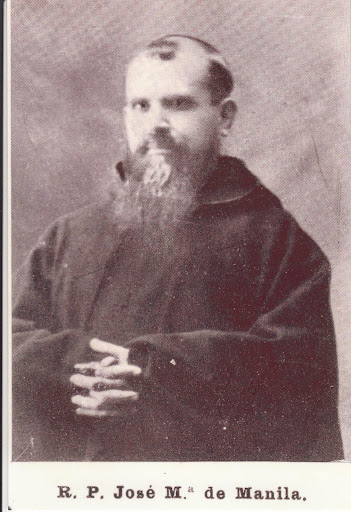
One of those beatified is a Spanish who was born in the Philippines, the Capuchin martyr Blessed Jose Maria de Manila, born to Spanish parents in Manila. His father was the last Spanish mayor of the City of Manila and received his education at the Ateneo, Letran and UST, all of which then were located in Intramuros.
Saturday, July 20, 2013
Saturday, July 13, 2013
The miracle brought by Ven. Alvaro del Portillo
The venerable raised the boy to life!!!
We'll anyone from the atheists and agnostics care to explain with science what just happened?
Any takers?
Thursday, June 6, 2013
From St. Peter's in Rome to St. Petersburg in Russia! This is why atheism is going gaga!
Europe is slowly fighting back to trace it's Christian roots!
Now, next is to intensify Eucharistic adoration, rid all types of liturgical abuse, promote the TLM and reverent celebration of the OF Mass, and dump all sexual abusers!!!
Tuesday, June 4, 2013
Francis visits John
June 3, 2013. (Romereports.com)
Pope Francis stopped a few minutes in prayer before the tomb of Pope John XXIII, who was beatified by John Paul II in 2000. Today marks the 50th anniversary of the death of the "Good Pope". John XXIII authored the encyclical "Pacem in Terris" and was the leading promoter of the Second Vatican Council.
Pope Francis invited everyone to imitate John XXIII's peace and obedience. [Pope John's episcopal motto was Pax et Obidentia.]
Monday, May 20, 2013
SJs Bernas and Tabora should attend this conference!
The conference is about the rise of secularism and intolerance to religious freedom.
Society of Judas members Bernas and Tabora wrote heavily to defend pluralism in the country but never did they give an inch for the protection off religious freedom and liberty of Filipino Catholics.
Now you know why they are members of that Society.
All it takes is 30 pieces of silver.
Fr. Joel Tabora is WRONG!
This genius pseudo-Catholic says that Catholicism is losing members in the Philippines.
Just as how Archbishop Oscar Cruz said that Catholicism in the Philippines is growing...
Here comes a new report from the Vatican about the number of Catholics in the whole world.
Fr. Tabora....go collect your money from condom companies!
SJ now stands for Society of Judas Iscariot! Hot all Jesuits are members
Tabora and Bernas are members.

Just as how Archbishop Oscar Cruz said that Catholicism in the Philippines is growing...
Here comes a new report from the Vatican about the number of Catholics in the whole world.
Fr. Tabora....go collect your money from condom companies!
SJ now stands for Society of Judas Iscariot! Hot all Jesuits are members
Tabora and Bernas are members.
Monday, April 29, 2013
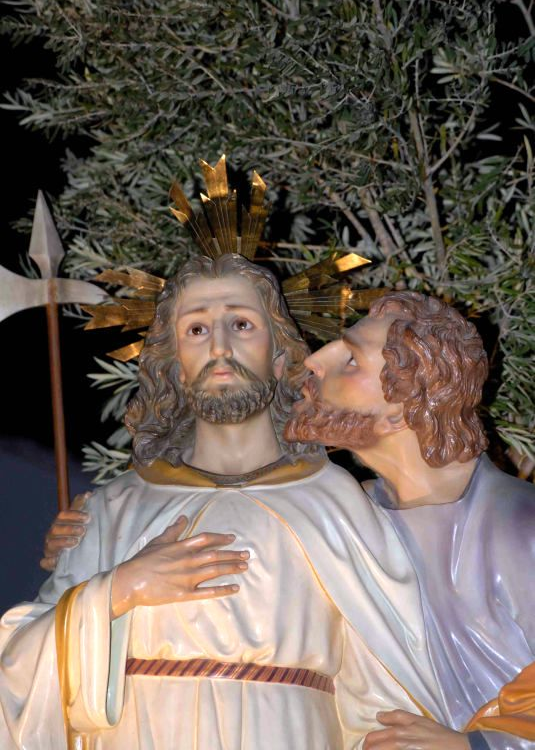
Another reason why most Jesuits squirm at the election of Bergoglio as Pope
And aside from the mostly liberal and modernistic Jesuits, include here those who graduated from the following theological schools in the Philippines!
St. Vincent School of Theology
Maryhill School of Theology
Institute of Formation and Religious Studies
East Asian Pastoral Institute
Euntes Mission Center, Zamboanga City
They are surely groaning that this pope is not into the "Spirit of Vatican II" of openness and acceptance.
And like Teilhard de Chardin and some of his brother Jesuits, like those who love that God-awful song "Christify"........Christ is present in everything and He expresses Himself in different cultures and religions....He may be Buddha for the Buddhist.........stuff like that.
Nail on the coffin for those who teach error like that!
***
Here is the full text of his homily:
I thank His Eminence, the Cardinal Dean, for his words: thank you very much, Your Eminence, thank you.
I also thank all of you who wanted to come today: Thank you. Because I feel welcomed by you. Thank you. I feel good with you, and I like that.
The [first] reading today makes me think that the missionary expansion of the Church began precisely at a time of persecution, and these Christians went as far as Phoenicia, Cyprus and Antioch, and proclaimed the Word. They had this apostolic fervor within them, and that is how the faith spread! [Dear TPC readers, do you see that same religious fervor when you hear the likes of Bernas and Tabora publicly questioning the Church??? Duh.] Some, people of Cyprus and Cyrene - not these, but others who had become Christians - went to Antioch and began to speak to the Greeks too. It was a further step. And this is how the Church moved forward. Whose was this initiative to speak to the Greeks? This was not clear to anyone but the Jews. But ... it was the Holy Spirit, the One who prompted them ever forward ... But some in Jerusalem, when they heard this, became 'nervous and sent Barnabas on an "apostolic visitation": perhaps, with a little sense of humor we could say that this was the theological beginning of the Doctrine of the Faith: this apostolic visit by Barnabas. He saw, and he saw that things were going well. [Only those who have something to hide are afraid of an Apostolic Visitation. When can we have one for seminaries and the nuns here in the Philippines, eh?]
And so the Church was a Mother, the Mother of more children, of many children. It became more and more of a Mother. A Mother who gives us the faith, a Mother who gives us an identity. But the Christian identity is not an identity card: Christian identity is belonging to the Church, because all of these belonged to the Church, the Mother Church. Because it is not possible to find Jesus outside the Church. [BOOM! Take that ECUMANIACS!!!] The great Paul VI said: "Wanting to live with Jesus without the Church, following Jesus outside of the Church, loving Jesus without the Church is an absurd dichotomy." And the Mother Church that gives us Jesus gives us our identity that is not only a seal, it is a belonging. Identity means belonging. This belonging to the Church is beautiful. [Now, you see why most of his Jesuit brothers hate him? hahaha]
And the third idea comes to my mind - the first was the explosion of missionary activity; the second, the Mother Church - and the third, that when Barnabas saw that crowd - the text says: " And a large number of people was added to the Lord" - when he saw those crowds, he experienced joy. " When he arrived and saw the grace of God, he rejoiced ": his is the joy of the evangelizer. It was, as Paul VI said, "the sweet and comforting joy of evangelizing." And this joy begins with a persecution, with great sadness, and ends with joy. And so the Church goes forward, as one Saint says - I do not remember which one, here [The pope is speaking right off the cuff] - "amid the persecutions of the world and the consolations of the Lord." And thus is the life of the Church. If we want to travel a little along the road of worldliness, negotiating with the world - as did the Maccabees, who were tempted, at that time - we will never have the consolation of the Lord. And if we seek only consolation, it will be a superficial consolation, not that of the Lord: a human consolation. The Church's journey always takes place between the Cross and the Resurrection, amid the persecutions and the consolations of the Lord. And this is the path: those who go down this road are not mistaken.
Let us think today about the missionary activity of the Church: these [people] came out of themselves to go forth. Even those who had the courage to proclaim Jesus to the Greeks, an almost scandalous thing at that time. [Ecumaniacs surely are scandalized if you start preaching Jesus to the Muslims and pagans. Yup. Ask most missionaries in the South, and up North and the members of the MSP. They bring Christ's love to the world. But ask them if they try to convert the people. You'd be surprised to learn that these missionaries do not want to convert them.] Think of this Mother Church that grows, grows with new children to whom She gives the identity of the faith, because you cannot believe in Jesus without the Church. Jesus Himself says in the Gospel: " But you do not believe, because you are not among my sheep." If we are not "sheep of Jesus," faith does not some to us. It is a rosewater faith, a faith without substance. And let us think of the consolation that Barnabas felt, which is "the sweet and comforting joy of evangelizing." And let us ask the Lord for this "parresia", this apostolic fervor that impels us to move forward, as brothers, all of us forward! Forward, bringing the name of Jesus in the bosom of Holy Mother Church, and, as St. Ignatius said, "hierarchical and Catholic." So be it.
****
Owwwww....
"Hierarchal and Catholic". Bummer for collegial monsters out there.
Such a bummer.
Well, anywho...
That is how the Church was since her foundation.
Blame Christ for it. He made a patriarchal, hierarchical Church, contrary to the beliefs of the "Bad of Spirit of Vatican II" trumpeters.
Christ chose Peter to govern over the Church. And Peter's successor continues to do so.
If you want collegiality, join the Anglican Communion. They are happily united to be disunited.
Tuesday, April 16, 2013
Pope Francis: Practice what you preach, priests and laity
***
Vatican City, 15 April 2013 (VIS) – Yesterday afternoon, Pope Francis presided over Mass at Saint Paul Outside-the-Walls on his first visit to that basilica as Bishop of Rome. Concelebrating with the Holy Father were Cardinal James Michael Harvey, archpriest of the basilica, and Abbot Edmund Power, O.S.B., of the St. Paul Outside-the-Walls Abbey.
In his homily, the Holy Father recalled that the basilica is built above the tomb of St. Paul, “a great yet humble Apostle of the Lord, who proclaimed him by word, bore witness to him by martyrdom and worshiped him with all his heart.” He added that these were the three words—proclamation, witness, worship—that he wanted to reflect upon in light of the Word of God in the liturgy's readings. [This is the typical approach to preaching a homily. Keywords. Makes me remember a priest-friend though he is not a Jesuit. :)]
Commenting on the first reading, in which the Apostles are imprisoned for preaching of the Risen Christ, the Pope observed that Peter and the Twelve “proclaim courageously, fearlessly, what they have received: the Gospel of Jesus. And we? Are we capable of bringing the word of God into the environment in which we live? Do we know how to speak of Christ, of what He represents for us, in our families, among the people who form part of our daily lives? Faith is born from listening, and is strengthened by proclamation.” [it starts from education, catechesis, an example! Even though we received our Faith when we were infants, we were nurtured to the Faith by our families.]
“The proclamation made by Peter and the Apostles,” he emphasized, “does not merely consist of words: fidelity to Christ affects their whole lives, which are changed, given a new direction, and it is through their lives that they bear witness to the faith and to the proclamation of Christ. In today’s Gospel, Jesus asks Peter three times to feed his flock, to feed it with his love, and He prophesies to him: 'When you are old, you will stretch out your hands, and another will gird you and carry you where you do not wish to go'. These words are addressed first and foremost to those of us who are pastors: we cannot feed God’s flock unless we let ourselves be carried by God’s will even where we would rather not go, unless we are prepared to bear witness to Christ with the gift of ourselves, unreservedly, not in a calculating way, sometimes even at the cost of our lives.” ["If we would not let go." Speaks more about letting go and letting God. I wonder if some priests actually have this in mind. Too much narcissism these days.]
“But this also applies to everyone: we all have to proclaim and bear witness to the Gospel. … In God’s great plan, every detail is important, even yours, even my humble little witness, even the hidden witness of those who live their faith with simplicity in everyday family relationships, work relationships, friendships. There are the saints of every day, the 'hidden' saints, a sort of 'middle class of holiness', as a French author said, that 'middle class of holiness' to which we can all belong.”
“But in different parts of the world, there are also those who suffer ... on account of the Gospel; there are those who give their lives in order to remain faithful to Christ ... Let us all remember this: one cannot proclaim the Gospel of Jesus without the tangible witness of one’s life. I am thinking now of some advice that Saint Francis of Assisi gave his brothers: 'Preach the Gospel and, if necessary, use words'. Preaching with your life, with your witness. Inconsistency on the part of pastors and the faithful between what they say and what they do, between word and manner of life, is undermining the Church’s credibility.” [Wonderful! I thank the Holy Father for bringing this into attention. Because of too much "active participation", we think that holiness consists more of doing and talking than actual "witnessing", which is more of living it out with our very own lives. Feminists nuns and liberals love to use the term "witnessing" to give an excuse for them not to wear their habit and to shun anything that is traditional in the Church. They think they are "trapped" into their "costumes" when in fact by just wearing their garb, they witness to the whole world the consecration they have given, the life they have offered in service of God and His Church. This is what the Liturgy is also. We worship not by taking up too many roles in the sanctuary. We worship and actively participate by praying from our pews, by praying in silence, then we also become "witness" of the unraveling of the Divine Liturgy when we pray in silence, not by thinking what our next dance moves are, what kind of creativities we would like to inject in the Mass. I remember hearing a story about St. Francis and the power of the religious habit. St. Francis once brought his little brothers to the market to preach. They stood in the corner of the market in their tattered habits. And then they went back. His brothers were wondering why they did not say a word and just stood there. St. Francis reportedly said "By just standing there, we have already preached." Sad to say that most priests, brothers and nuns give the flimsy excuse of being "immersed" with the community by shunning their habits. As if the people will run away once they see a woman in nuns clothing or a priest in cassock!]
“All this is possible only if we recognize Jesus Christ, because it is He who has called us, He who has invited us to travel his path, He who has chosen us. Proclamation and witness are only possible if we are close to him, just as Peter, John and the other disciples in today’s Gospel passage were gathered around the Risen Jesus. … And this is important for us: living an intense relationship with Jesus, an intimacy of dialogue and of life, in such a way as to recognize him as 'the Lord'. Worshipping him!”
“I would like all of us to ask ourselves this question: [ask yourself, ask myself] Do we worship the Lord? Do we turn to God only to ask him for things, to thank him, or do we also turn to him to worship him? What does it mean, then, to worship God? … All of us, in our own lives, consciously and perhaps sometimes unconsciously, have a very clear order of priority concerning the things we consider important. Worshipping the Lord means giving him the place that He must have; worshipping the Lord means stating, believing—not only by our words—that He alone truly guides our lives; worshipping the Lord means that we are convinced before him that He is the only God, the God of our lives, the God of our history.” [Obedience ring a bell folks?]
“This has a consequence in our lives,” the pontiff noted. “We have to empty ourselves of the many small or great idols that we have and in which we take refuge and upon which we often seek to base our security. They are idols that we sometimes keep well hidden; they can be ambition, careerism, a taste for success, placing ourselves at the centre, the tendency to dominate others, the claim to be the sole masters of our lives, some sins to which we are bound, and many others. This evening I would like a question to resound in each of your hearts, and I would like you to answer it honestly: Have I considered which idol lies hidden in my life that prevents me from worshipping the Lord? Worshipping is stripping ourselves of our idols, even the most hidden ones, and choosing the Lord as the centre, as the privileged path of our lives.” [Ha! I can think of one blogger right now! Ha!]
“The Lord,” concluded the Bishop of Rome, “calls us each day to follow him with courage and fidelity. He has made us the great gift of choosing us as his disciples. He invites us to proclaim him with joy as the Risen one, but He asks us to do so by word and by the witness of our lives, in daily life. The Lord is the only God of our lives, and He invites us to strip ourselves of our many idols and to worship him alone. To proclaim, to witness, to worship.”
***
TRUE!
Funny how some priests...
...publicly humiliate and castigate the SSPX for not obeying the Pope when he in fact cannot even obey his own superior with a simple request to stay off his computer!
...publicly profess obedience to the Holy Church yet continuously defy liturgical laws.
...publicly defend the Holy Church, daw, but in fact loves and craves the attention for what he is doing. Was it all really for the Lord or for fame and fortune?
If it is not for fame and fortune, try my style! Don't show your real face and go around asking for freebies and inviting yourself to events and asking for a seat of honor and asking for "donations" and...
Ah, obedience! Nobody knows it better than these folks.


These men and women BREATHED Obedience!
One sign that a priest or a religious has a problem...when he becomes the superior of his own, even if the order of the superior is valid, not conflicting to Church law or morals...
Some folks are really full of hot air in their coconut shells.
Really!
Vatican City, 15 April 2013 (VIS) – Yesterday afternoon, Pope Francis presided over Mass at Saint Paul Outside-the-Walls on his first visit to that basilica as Bishop of Rome. Concelebrating with the Holy Father were Cardinal James Michael Harvey, archpriest of the basilica, and Abbot Edmund Power, O.S.B., of the St. Paul Outside-the-Walls Abbey.
In his homily, the Holy Father recalled that the basilica is built above the tomb of St. Paul, “a great yet humble Apostle of the Lord, who proclaimed him by word, bore witness to him by martyrdom and worshiped him with all his heart.” He added that these were the three words—proclamation, witness, worship—that he wanted to reflect upon in light of the Word of God in the liturgy's readings. [This is the typical approach to preaching a homily. Keywords. Makes me remember a priest-friend though he is not a Jesuit. :)]
Commenting on the first reading, in which the Apostles are imprisoned for preaching of the Risen Christ, the Pope observed that Peter and the Twelve “proclaim courageously, fearlessly, what they have received: the Gospel of Jesus. And we? Are we capable of bringing the word of God into the environment in which we live? Do we know how to speak of Christ, of what He represents for us, in our families, among the people who form part of our daily lives? Faith is born from listening, and is strengthened by proclamation.” [it starts from education, catechesis, an example! Even though we received our Faith when we were infants, we were nurtured to the Faith by our families.]
“The proclamation made by Peter and the Apostles,” he emphasized, “does not merely consist of words: fidelity to Christ affects their whole lives, which are changed, given a new direction, and it is through their lives that they bear witness to the faith and to the proclamation of Christ. In today’s Gospel, Jesus asks Peter three times to feed his flock, to feed it with his love, and He prophesies to him: 'When you are old, you will stretch out your hands, and another will gird you and carry you where you do not wish to go'. These words are addressed first and foremost to those of us who are pastors: we cannot feed God’s flock unless we let ourselves be carried by God’s will even where we would rather not go, unless we are prepared to bear witness to Christ with the gift of ourselves, unreservedly, not in a calculating way, sometimes even at the cost of our lives.” ["If we would not let go." Speaks more about letting go and letting God. I wonder if some priests actually have this in mind. Too much narcissism these days.]
“But this also applies to everyone: we all have to proclaim and bear witness to the Gospel. … In God’s great plan, every detail is important, even yours, even my humble little witness, even the hidden witness of those who live their faith with simplicity in everyday family relationships, work relationships, friendships. There are the saints of every day, the 'hidden' saints, a sort of 'middle class of holiness', as a French author said, that 'middle class of holiness' to which we can all belong.”
“But in different parts of the world, there are also those who suffer ... on account of the Gospel; there are those who give their lives in order to remain faithful to Christ ... Let us all remember this: one cannot proclaim the Gospel of Jesus without the tangible witness of one’s life. I am thinking now of some advice that Saint Francis of Assisi gave his brothers: 'Preach the Gospel and, if necessary, use words'. Preaching with your life, with your witness. Inconsistency on the part of pastors and the faithful between what they say and what they do, between word and manner of life, is undermining the Church’s credibility.” [Wonderful! I thank the Holy Father for bringing this into attention. Because of too much "active participation", we think that holiness consists more of doing and talking than actual "witnessing", which is more of living it out with our very own lives. Feminists nuns and liberals love to use the term "witnessing" to give an excuse for them not to wear their habit and to shun anything that is traditional in the Church. They think they are "trapped" into their "costumes" when in fact by just wearing their garb, they witness to the whole world the consecration they have given, the life they have offered in service of God and His Church. This is what the Liturgy is also. We worship not by taking up too many roles in the sanctuary. We worship and actively participate by praying from our pews, by praying in silence, then we also become "witness" of the unraveling of the Divine Liturgy when we pray in silence, not by thinking what our next dance moves are, what kind of creativities we would like to inject in the Mass. I remember hearing a story about St. Francis and the power of the religious habit. St. Francis once brought his little brothers to the market to preach. They stood in the corner of the market in their tattered habits. And then they went back. His brothers were wondering why they did not say a word and just stood there. St. Francis reportedly said "By just standing there, we have already preached." Sad to say that most priests, brothers and nuns give the flimsy excuse of being "immersed" with the community by shunning their habits. As if the people will run away once they see a woman in nuns clothing or a priest in cassock!]
“All this is possible only if we recognize Jesus Christ, because it is He who has called us, He who has invited us to travel his path, He who has chosen us. Proclamation and witness are only possible if we are close to him, just as Peter, John and the other disciples in today’s Gospel passage were gathered around the Risen Jesus. … And this is important for us: living an intense relationship with Jesus, an intimacy of dialogue and of life, in such a way as to recognize him as 'the Lord'. Worshipping him!”
“I would like all of us to ask ourselves this question: [ask yourself, ask myself] Do we worship the Lord? Do we turn to God only to ask him for things, to thank him, or do we also turn to him to worship him? What does it mean, then, to worship God? … All of us, in our own lives, consciously and perhaps sometimes unconsciously, have a very clear order of priority concerning the things we consider important. Worshipping the Lord means giving him the place that He must have; worshipping the Lord means stating, believing—not only by our words—that He alone truly guides our lives; worshipping the Lord means that we are convinced before him that He is the only God, the God of our lives, the God of our history.” [Obedience ring a bell folks?]
“This has a consequence in our lives,” the pontiff noted. “We have to empty ourselves of the many small or great idols that we have and in which we take refuge and upon which we often seek to base our security. They are idols that we sometimes keep well hidden; they can be ambition, careerism, a taste for success, placing ourselves at the centre, the tendency to dominate others, the claim to be the sole masters of our lives, some sins to which we are bound, and many others. This evening I would like a question to resound in each of your hearts, and I would like you to answer it honestly: Have I considered which idol lies hidden in my life that prevents me from worshipping the Lord? Worshipping is stripping ourselves of our idols, even the most hidden ones, and choosing the Lord as the centre, as the privileged path of our lives.” [Ha! I can think of one blogger right now! Ha!]
“The Lord,” concluded the Bishop of Rome, “calls us each day to follow him with courage and fidelity. He has made us the great gift of choosing us as his disciples. He invites us to proclaim him with joy as the Risen one, but He asks us to do so by word and by the witness of our lives, in daily life. The Lord is the only God of our lives, and He invites us to strip ourselves of our many idols and to worship him alone. To proclaim, to witness, to worship.”
***
TRUE!
Funny how some priests...
...publicly humiliate and castigate the SSPX for not obeying the Pope when he in fact cannot even obey his own superior with a simple request to stay off his computer!
...publicly profess obedience to the Holy Church yet continuously defy liturgical laws.
...publicly defend the Holy Church, daw, but in fact loves and craves the attention for what he is doing. Was it all really for the Lord or for fame and fortune?
If it is not for fame and fortune, try my style! Don't show your real face and go around asking for freebies and inviting yourself to events and asking for a seat of honor and asking for "donations" and...
Ah, obedience! Nobody knows it better than these folks.

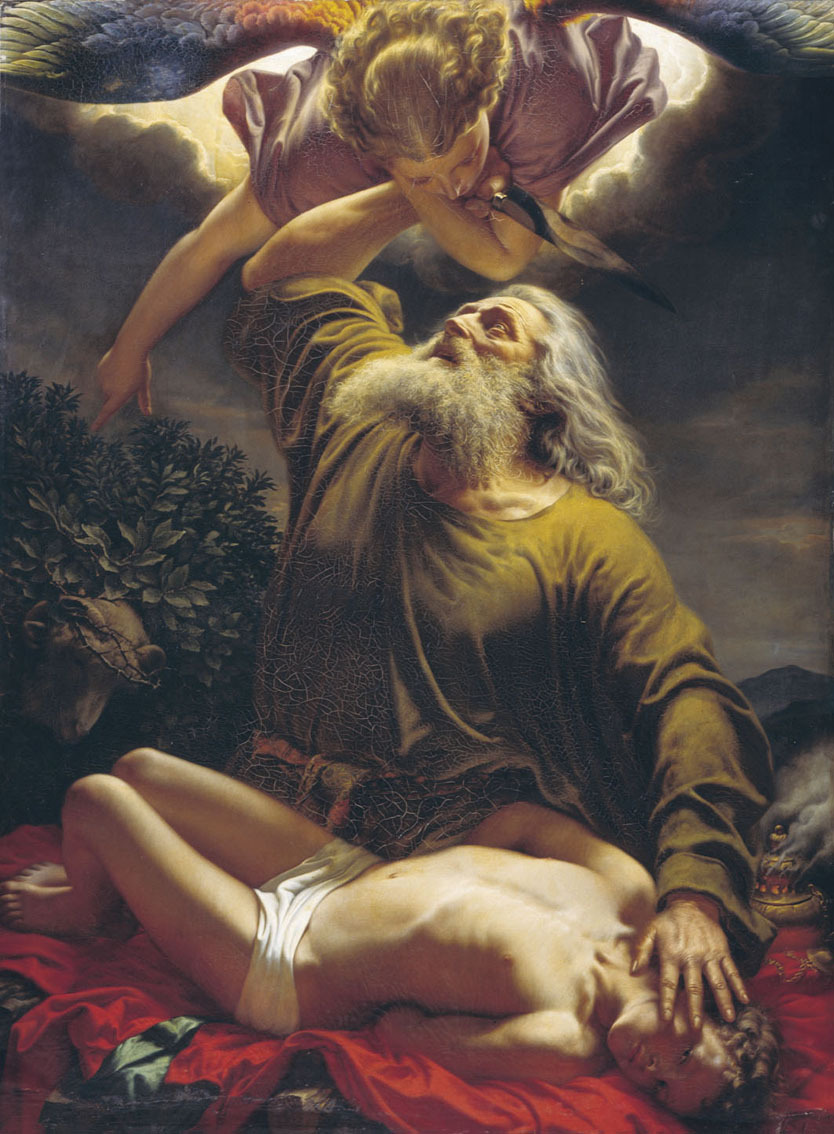


These men and women BREATHED Obedience!
One sign that a priest or a religious has a problem...when he becomes the superior of his own, even if the order of the superior is valid, not conflicting to Church law or morals...
Some folks are really full of hot air in their coconut shells.
Really!
”Obedience is a virtue of so excellent a nature, that Our Lord was pleased to mark its observance upon the whole course of His life; thus He often says, He did not come to do His Own will, but that of His Heavenly Father.”
--Saint Francis of Sales, Doctor of the Church
”Naturally we all have an inclination to command, and a great aversion to obey; and yet it is certain that it is more for our good to obey than to command; hence perfect souls have always had a great affection for obedience, and have found all their joy and comfort in it.”
--Saint Francis of Sales, Doctor of the Church
Monday, March 25, 2013
The meeting of the two popes...
I thought I'd never see this sight...
I'd thought it would only be good for a Hollywood script until I saw it on the news last night...
You can see in the video that the Pope Emeritus is wearing his cardinatial ring.
It would have been a lovely sight to see if Benedict kissed the ring of the current Holy Father.
The altar cross is also veiled as it should be, in the Castelgandolfo chapel. Notice that there is no free-standing altar in the chapel, meaning Mass is celebrated in the altar ad Deum.
In the table where the two popes are meeting you can see a pile of paper on the table.
Could this be the dossier prepared by the commission of cardinals?
Benedict XVI is very weak as you can see. He had a hard time walking and Papa Francesco had to help him.
Here is the same video from Rome Reports:
I'd thought it would only be good for a Hollywood script until I saw it on the news last night...
You can see in the video that the Pope Emeritus is wearing his cardinatial ring.
It would have been a lovely sight to see if Benedict kissed the ring of the current Holy Father.
The altar cross is also veiled as it should be, in the Castelgandolfo chapel. Notice that there is no free-standing altar in the chapel, meaning Mass is celebrated in the altar ad Deum.
In the table where the two popes are meeting you can see a pile of paper on the table.
Could this be the dossier prepared by the commission of cardinals?
Benedict XVI is very weak as you can see. He had a hard time walking and Papa Francesco had to help him.
Here is the same video from Rome Reports:
Thursday, March 21, 2013
Pope Francis brings together men of other faiths
From Zenit
The full text of the Pope's address can be read here.
***
Pope Francis received in audience today representatives of Churches, ecclesial communities, and international ecumenical and interreligious organizations. The delegations have come to Rome for the inauguration of Francis’ ministry as Bishop of Rome and Successor of the Apostle Peter.
On behalf of those present, the Ecumenical Patriarch of Constantinople, Bartholomew I, greeted the Pope, recalling the “elevated, serious, and difficult task” that his ministry bears with it. He also reiterated the need for the Churches to shun worldly distractions and to work on the unity between Christians. [The Ecumenical Patriarchate did not give this much weight on ecumenical dialogue but only during the pontificate of Benedict XVI.]
This was the first time that an ecumenical patriarch has attended a papal inauguration since the Schism of 1054.
Pope Francis, who was seated on an armchair rather than the throne that is customarily used in the Clementine Hall, thanked Bartholomew I, referring to him as “my brother Andrew”, a reference to the fact that the patriarchs of Constantinople are considered the successors of the Apostle Andrew, the brother of Simon Peter.
The Holy Father stated that with their presence at yesterday’s Mass, he experienced “in an even more urgent way the prayer for unity among believers in Christ and together to see somehow foreshadowed that full realization, which depends on the plan of God and on our loyal collaboration.”
“I begin my Apostolic Ministry in this year which my venerable predecessor, Pope Benedict XVI, with truly inspired insight, proclaimed the Year of Faith for the Catholic Church,” the Holy Father said. [He called him "Pope", so those who worry too much with the title, there you have it. The current pope, calls the retired pope, pope! Three "popes" in one sentence! Ha!]
“With this initiative, which I want to continue and hope is a stimulus for the faith journey of all, he wished to mark the 50th anniversary of the beginning of the Second Vatican Council, proposing a sort of pilgrimage towards that which is most essential for every Christian: the personal and transforming relationship with Jesus Christ, Son of God, who died and rose for our salvation.” [Those who preach the wrong intrepretation of Vatican II claim that Christ did not bodily rise from the dead. But he "rose" and is "alive" in our hearts. I am not joking. I heard this spoken in a parish seminar by a layman who attended a "seminar" at MST.]
Pope Francis stressed that the heart of Vatican II is in the desire to announce the “treasure of faith” to today’s man. The Holy Father assured those present of his determination to continue the path of ecumenical dialogue established by his predecessors.
Addressing the representatives of the Jewish people, Pope Francis thanked them for their presence while acknowledging that the two faiths are “joined in a very special spiritual bond.” Referring to the Nostra aetate declaration of the Second Vatican Council, the Holy Father reiterated that the Catholic Church recognizes that “the beginnings of her faith and her election are already, according to the divine mystery of salvation, in the Patriarchs, Moses, and the prophets.”
“Thank you for your presence and I am confident that, with the help of the Almighty, we will be able to continue profitably that fraternal dialogue that the Council advocated and that has actually been accomplished, bringing many fruits, especially in recent decades,” the Pope said.
The Pope addressed the other religious representatives present, in particular the Muslim delegation, who the Holy Father said “worship the one God, living and merciful, and call upon Him in prayer.”
“I really appreciate your presence,” the Pope said. “In it I see a tangible sign of the will to grow in mutual esteem and cooperation for the common good of humanity.”
Concluding his address, Pope Francis recognized the need for a peaceful coexistence between faiths that protects man’s inherent search for the truth. “We know how much violence has been produced in recent history by the attempt to eliminate God and the divine from the horizon of humanity, and we experience the value of witnessing in our societies to the original opening to transcendence that is inherent in the human heart,” the Holy Father said.
“In this, we feel close even to all those men and women who, whilst not recognising themselves belonging to any religious tradition, feel themselves nevertheless to be in search of truth, goodness and beauty, this truth, goodness and beauty of God, and who are our precious allies in efforts to defend the dignity of man, in building a peaceful coexistence among peoples and in guarding Creation carefully.”
Fr. Federico Lombardi, director of the Holy See Press Office, noted the significance of today’s audience, in particular with His Holiness Bartholomew I. Prior to the audience, Fr. Lombardi said the Holy Father and the Ecumenical Patriarch had a private meeting which lasted for roughly 20 minutes. The meeting, he said, was both “beautiful and intense”.
The Holy Father also received Metropolitan Hilarion of Volokolamsk, who came representing the Patriarch of Moscow, Kirill. Fr. Lombardi stated that the Metropolitan delivered a personal message from the Patriarch to Pope Francis, as well as an icon of the Blessed Virgin Mary.
The audience with all the delegations, Fr. Lombardi said, “is also significant to the continuing dialogue with all religions, particularly with the Jewish and Muslim people.”
“It is known that with the Jewish community in Argentina, the Holy Father had a wonderful relationship. There were many within the Jewish delegation who were very enthusiastic and happy, as well as within the Muslim [delegation].”
“We can see,” Fr. Lombardi continued, “that the Pope is a person that has the fame of being very open and has an experience of good relations with other religious communities.”
The full text of the Pope's address can be read here.
***
Pope Francis received in audience today representatives of Churches, ecclesial communities, and international ecumenical and interreligious organizations. The delegations have come to Rome for the inauguration of Francis’ ministry as Bishop of Rome and Successor of the Apostle Peter.
On behalf of those present, the Ecumenical Patriarch of Constantinople, Bartholomew I, greeted the Pope, recalling the “elevated, serious, and difficult task” that his ministry bears with it. He also reiterated the need for the Churches to shun worldly distractions and to work on the unity between Christians. [The Ecumenical Patriarchate did not give this much weight on ecumenical dialogue but only during the pontificate of Benedict XVI.]
This was the first time that an ecumenical patriarch has attended a papal inauguration since the Schism of 1054.
Pope Francis, who was seated on an armchair rather than the throne that is customarily used in the Clementine Hall, thanked Bartholomew I, referring to him as “my brother Andrew”, a reference to the fact that the patriarchs of Constantinople are considered the successors of the Apostle Andrew, the brother of Simon Peter.
The Holy Father stated that with their presence at yesterday’s Mass, he experienced “in an even more urgent way the prayer for unity among believers in Christ and together to see somehow foreshadowed that full realization, which depends on the plan of God and on our loyal collaboration.”
“I begin my Apostolic Ministry in this year which my venerable predecessor, Pope Benedict XVI, with truly inspired insight, proclaimed the Year of Faith for the Catholic Church,” the Holy Father said. [He called him "Pope", so those who worry too much with the title, there you have it. The current pope, calls the retired pope, pope! Three "popes" in one sentence! Ha!]
“With this initiative, which I want to continue and hope is a stimulus for the faith journey of all, he wished to mark the 50th anniversary of the beginning of the Second Vatican Council, proposing a sort of pilgrimage towards that which is most essential for every Christian: the personal and transforming relationship with Jesus Christ, Son of God, who died and rose for our salvation.” [Those who preach the wrong intrepretation of Vatican II claim that Christ did not bodily rise from the dead. But he "rose" and is "alive" in our hearts. I am not joking. I heard this spoken in a parish seminar by a layman who attended a "seminar" at MST.]
Pope Francis stressed that the heart of Vatican II is in the desire to announce the “treasure of faith” to today’s man. The Holy Father assured those present of his determination to continue the path of ecumenical dialogue established by his predecessors.
Addressing the representatives of the Jewish people, Pope Francis thanked them for their presence while acknowledging that the two faiths are “joined in a very special spiritual bond.” Referring to the Nostra aetate declaration of the Second Vatican Council, the Holy Father reiterated that the Catholic Church recognizes that “the beginnings of her faith and her election are already, according to the divine mystery of salvation, in the Patriarchs, Moses, and the prophets.”
“Thank you for your presence and I am confident that, with the help of the Almighty, we will be able to continue profitably that fraternal dialogue that the Council advocated and that has actually been accomplished, bringing many fruits, especially in recent decades,” the Pope said.
The Pope addressed the other religious representatives present, in particular the Muslim delegation, who the Holy Father said “worship the one God, living and merciful, and call upon Him in prayer.”
“I really appreciate your presence,” the Pope said. “In it I see a tangible sign of the will to grow in mutual esteem and cooperation for the common good of humanity.”
Concluding his address, Pope Francis recognized the need for a peaceful coexistence between faiths that protects man’s inherent search for the truth. “We know how much violence has been produced in recent history by the attempt to eliminate God and the divine from the horizon of humanity, and we experience the value of witnessing in our societies to the original opening to transcendence that is inherent in the human heart,” the Holy Father said.
“In this, we feel close even to all those men and women who, whilst not recognising themselves belonging to any religious tradition, feel themselves nevertheless to be in search of truth, goodness and beauty, this truth, goodness and beauty of God, and who are our precious allies in efforts to defend the dignity of man, in building a peaceful coexistence among peoples and in guarding Creation carefully.”
Fr. Federico Lombardi, director of the Holy See Press Office, noted the significance of today’s audience, in particular with His Holiness Bartholomew I. Prior to the audience, Fr. Lombardi said the Holy Father and the Ecumenical Patriarch had a private meeting which lasted for roughly 20 minutes. The meeting, he said, was both “beautiful and intense”.
The Holy Father also received Metropolitan Hilarion of Volokolamsk, who came representing the Patriarch of Moscow, Kirill. Fr. Lombardi stated that the Metropolitan delivered a personal message from the Patriarch to Pope Francis, as well as an icon of the Blessed Virgin Mary.
The audience with all the delegations, Fr. Lombardi said, “is also significant to the continuing dialogue with all religions, particularly with the Jewish and Muslim people.”
“It is known that with the Jewish community in Argentina, the Holy Father had a wonderful relationship. There were many within the Jewish delegation who were very enthusiastic and happy, as well as within the Muslim [delegation].”
“We can see,” Fr. Lombardi continued, “that the Pope is a person that has the fame of being very open and has an experience of good relations with other religious communities.”
Tuesday, March 19, 2013
What to expect at today's Mass of the Inauguration to the Petrine Ministry
Yup, that is the official name of that Mass.
This is a lengthy one. Bear with me.
The video says "The Vatican is expecting at least 200 faithful to attend."
Wha?!
Just 200?
LOL!
***
Vatican City, 18 March 2013 (VIS) – In the press conference held today, Fr. Federico Lombardi, S.J., director of the Press Office of the Holy See, focused on two themes: Pope Francis' first audiences and details of the Mass inaugurating the Petrine Ministry of the Bishop of Rome.
First, Fr. Lombardi relayed the information that the Holy Father was, at the moment, having lunch with the President of Argentina, Cristina Fernandez de Kirchner, whom he received at the Domus Sanctae Marthae “in a private meeting that lasted around 20 minutes, afterwards greeting the other members of the Argentine delegation”. Also this morning, at 10:00am, Francis received in audience Cardinal Secretary of State Tarcisio Bertone, S.D.B. Yesterday afternoon he had two very cordial audiences, one with the Bishop of Albano, Italy, and the other with the Superior General of the Jesuits, Fr. Adolfo Nicolas Pachon. [He is now doing what a head of state and the Bishop of Rome does.]
The main part of the press conference was dedicated to how the Mass inaugurating the Petrine Ministry of the Bishop of Rome will be celebrated. “The correct term for the ceremony,” Fr. Lombardi clarified, “is not enthronement but inauguration. As successor of Peter, the Pope is Bishop of Rome and the Church of Rome 'presides in love' over the others. Also, it is a celebration rich with symbols that recall the Pope's tie to St. Peter, beginning with the place where, according to tradition, Peter was martyred.”
The Press Office Director also explained where those participating in and attending the Mass will be located. “On the left-hand side of the 'Sagrato' (porch of the Basilica) will be seated bishops and archbishops (around 250 are expected), ecclesiastics, and delegations from other Churches and Christian confessions. On the right-hand side of the 'Sagrato' will be delegations from various countries lead by heads of state, ministers, etc. On the St. Peter’s statue side of the piazza will be seated Jews, Muslims, and members of other religions, then around 1200 priests and seminarians. On the St. Paul’s statue side of the piazza will be seated the diplomatic corps accredited to the Holy See and other civil authorities. The rest of the piazza will be standing-room for all those without tickets. A large number is expected to attend.”
Between 8:45 and 8:50am the Pope will depart the Domus Sanctae Marthae and start to move through the crowd in the various sections of the piazza—either in the Jeep or the Popemobile—and greet those gathered. He will return to the Sacristy, via the Pietà side, around 9:15am. Mass is planned to begin at 9:30am. [about 4PM Manila time.]
Regarding the beginning of the ceremony, the Pope, once having entered the Basilica, will head to the Confession (St. Peter’s tomb under the high altar) while trumpets will announce the “Tu es Petrus”. The Pope will venerate the tomb of St. Peter, together with the Patriarchs and Major Archbishops of the Eastern Rite Catholic Churches (ten in number, four of whom are cardinals). He will then be presented with the Pallium, Ring, and Book of the Gospels that were placed at St. Peter’s tomb the night before.
The Holy Father will then come back up from the Confession to the main floor of the Basilica, from which the procession continues. The “Laudes Regiae” (Christ is King) will be chanted, with some invocations taken from the Vatican II document on the Church, “Lumen Gentium”. In the Litany of Saints are particularly to be noted, after the Apostles, the Holy Roman Pontiffs who have been canonized up to the most recent: St. Pius X. Fr. Lombardi clarified that these are only the pontiffs who have been named as saints, not those who have been beatified. The procession will then make its entrance into the square.
Fr. Lombardi listed who will be concelebrating the Mass with Francis: all the cardinals present in Rome, joined by the Patriarchs and Major Eastern Rite Archbishops (6); the Secretary of the College of Cardinals; and two Superior Generals (that of the Order of Friars Minor, Jose Rodriguez Carballo and that of the Jesuits, Adolfo Nicolas Pachon, respectively President and Vice-President of the Union of Superior Generals). In total about 180 are expected to concelebrate and they will be seated at the left (that is, in front of the ecclesiastics, not the national delegations).
Before the Mass begins there are the rites specific to the beginning of the Bishop of Rome's Petrine Ministry. These include:
The Imposition of the Pallium:
Made of lamb’s wool and sheep’s wool, the Pallium is placed on the Pope's shoulders recalling the Good Shepherd who carries the lost sheep on his shoulders. The Pope’s Pallium has five red crosses while the Metropolitans’ Palliums have five black crosses. The one used by Francis is the same one that Benedict XVI used. It is placed on the Pope’s shoulders by Cardinal proto-deacon Tauran and, after the imposition, there is a prayer recited by Cardinal proto-presbyter Daneels.
The Fisherman’s Ring:
Peter is the fisherman Apostle, called to be a “fisher of men”. The ring is presented to the Pope by Cardinal Deacon Sodano (first of the Order of Bishops). It bears the image of St. Peter with the keys. It was designed by Enrico Manfrini The ring was in the possession of Archbishop Macchi, Pope Paul VI's personal secretary, and then Msgr. Malnati, who proposed it to Pope Francis through Cardinal Re. It is made of silver and gold.
 |
| The Fisherman's Ring of Pope Francis showing St. Peter casting his net while holding the Keys of the Kingdom of Heaven. Western Media calls it "simple". Eh.....it ain't simple to me. Almost looks the same as Benedict's. Expect the media to keep spinning the word "simple" and "humble" for the duration of this pontificate, just to take a swipe at Benedict. |
The “Obedience”:
Six cardinals, two from each order, among the first of those present approach the Pope to make an act of obedience. Note that all the Cardinal electors already made an act of obedience in the Sistine Chapel at the end of the Conclave and that all the cardinals were able to meet the Pope in the following day’s audience in the Clementine Hall. Also, at the moment of “taking possession” of the Cathedral of Rome—St. John Lateran—it is expected that the act of obedience will be made by representatives of the various members of the People of God.
The Mass will be that of the Solemnity of St. Joseph, [today!] which has its own readings (therefore they are not directly related to the rite of the Inauguration of the Pontificate). The Gospel will be proclaimed in Greek, as at the highest solemnities, to show that the universal Church is made up of the great traditions of the East and the West. “Latin,” Fr. Lombardi said, “is already abundantly present in the other prayers and Mass parts.”
The Pope will give his homily in Italian and, as is his style, it probably will not follow the written text strictly, but will contain improvisations.
Fr. Lombardi said that the Master of Celebrations [is it still Msgr. Guido Marini?] expects that the ceremony will not last much more than two hours and, always with the intention of simplification and not making the rite overly long, there will not be an Offertory procession. [Which I personally do not prefer and which, FYI, is NOT in the TLM. Hmmmm...Simplicity gravitating towards the TLM? Hehehe. Wishful thinking. But who knows!] The Eucharistic gifts will be brought to the altar by the ministers who prepare the altar. Also, the Pope will not distribute Communion, which will be done by the deacons on the “Sagrato” and, in the various areas of the piazza, by priests. [Why............not?]
Regarding the music for the ceremony, several moments are notable. When the Pope enters the Basilica silver trumpets will ring out the “Tu es Petrus”. The Laudes Regiae will be chanted during the procession from St. Peter’s tomb to the “Sagrato”. A 14 piece brass ensemble will play at various moments of the celebration. During the Offertory the “Tu es pastor ovium” (You Are the Shepherd of the Sheep) motet composed by Pierluigi da Palestrina precisely for the Inauguration of the Pontificate will be sung. At the conclusion, the “Te Deum” will be sung with verses alternating between Gregorian chant and a melody by Tomas Luis de Victoria. As it will not be held on a Sunday, there will be no Angelus after the Mass.
At the end of the celebration, and after removing the Liturgical vestments, the Pope will go to the Basilica’s high altar, [In Benedict's case, he wore the mozzetta and state stole when he greeted the delegations. I do not expect Pope Francis to wear these.] before which he will greet the heads of the official delegations from various countries who will pass before him. He will then go to the Domus Sanctae Marthae for lunch.
Other delegations staying in Rome can meet with Cardinal Tarcisio Bertone, S.D.B., secretary of State of His Holiness, and Archbishop Dominique Mamberti, secretary for Relations with States the following day, Wednesday (for example, the President of Brazil in light of the upcoming World Youth Day). As is known, the Pope will receive delegations of the Christian Churches and Ecclesial Communities and of other religions in audience on Wednesday.
At the present moment, the main delegations that are expected to attend are:
- 33 delegations representing Christian Churches and Ecclesial Communities (14 Oriental; 10 Western; 3 Christian organizations; others). Among these will be present: Ecumenical Patriarch Bartholomew I; Supreme Patriarch and Catholicos of all Armenians Karekin II; Metropolitan Hilarion of the Patriarchate of Moscow; many metropolitans; Anglican Archbishop Sentamu; Secretary of the World Council of Churches Fykse Tveit; etc.
- 16 members of important Jewish delegations including: the Jewish community of Rome; international Jewish committees; the Chief Rabbinate of Israel; the World Jewish Congress; the Anti-Defamation League, etc.
- As well as delegations of Muslims, Buddhists, Sikhs, Jainists, etc.
To date, delegations of various sizes and levels from 132 countries have confirmed their attendance.
“The delegations,” Fr. Lombardi emphasized, “are coming to Rome following information of the event made public by the Secretary of State. There were no 'invitations' sent out. All who wish to come are warmly welcomed. It must be made clear that no one has privileged status or will be refused. The order will depend on protocol and the level of the delegation.”
Naturally, the most important delegations will be those from Argentina, led by President Cristina Kirchner and Italy, led by President Napolitano and Prime Minister Monti with presidents of the Italian Senate, House, and Constitutional Court.
Also expected are six reigning sovereigns (Belgium, Monaco…); 31 heads of state (Austria, Brazil, Chile, Mexico, Canada, Poland, Portugal, European Union…); three crown princes (Spain, Holland, Bahrain); 11 heads of government (Germany, France, the Vice President of the United States, …); and delegations led by: first ladies, vice presidents, vice prime ministers, parliament presidents, ministers, ambassadors, and other dignitaries.
Papal Coat of Arms:
The last topic that Fr. Lombardi covered was the now pontiff's papal coat of arms and motto. These are the same that he used as bishop. The shield has a bright blue background, at the centre top of which is a yellow radiant sun with the IHS christogram on it representing Jesus (it is also the Jesuit logo). The IHS monogram, as well as a cross that pierces the H, are in red with three black nails directly under them. Under that, to the left, is a star representing Mary, Mother of Christ and the Church. To the right of the star is a nard flower representing Joseph, Patron of the Universal Church. With these symbols the Pope demonstrates his love for the Holy Family.
What distinguishes his coat of arms as pontiff is that, instead of the wide-brimmed, red cardinal's hat atop the shield, it is now crowned by the papal tiara and crossed keys.
[So it won't be this one after all!]
 |
| According to Fr. Lombardi, this is NOT the papal crest! |
[Then...what is he holding here???]

[Geewhiz! There is really something wrong with the Vatican Information Service, no?]
His motto—“miserando atque eligendo” (because he saw him through the eyes of mercy and chose him)—is taken from the Venerable Bede's homily on the Gospel account of the call of Matthew. It holds special meaning for the Pope because—when he was only 17-years-old, after going to confession on the Feast of St. Matthew in 1953—he perceived God's mercy in his life and felt the call to the priesthood, following the example of St. Ignatius of Loyola.
***
I'll be watching via EWTN Live streaming or via the Centro Televisivo Vaticano.
Subscribe to:
Posts (Atom)